
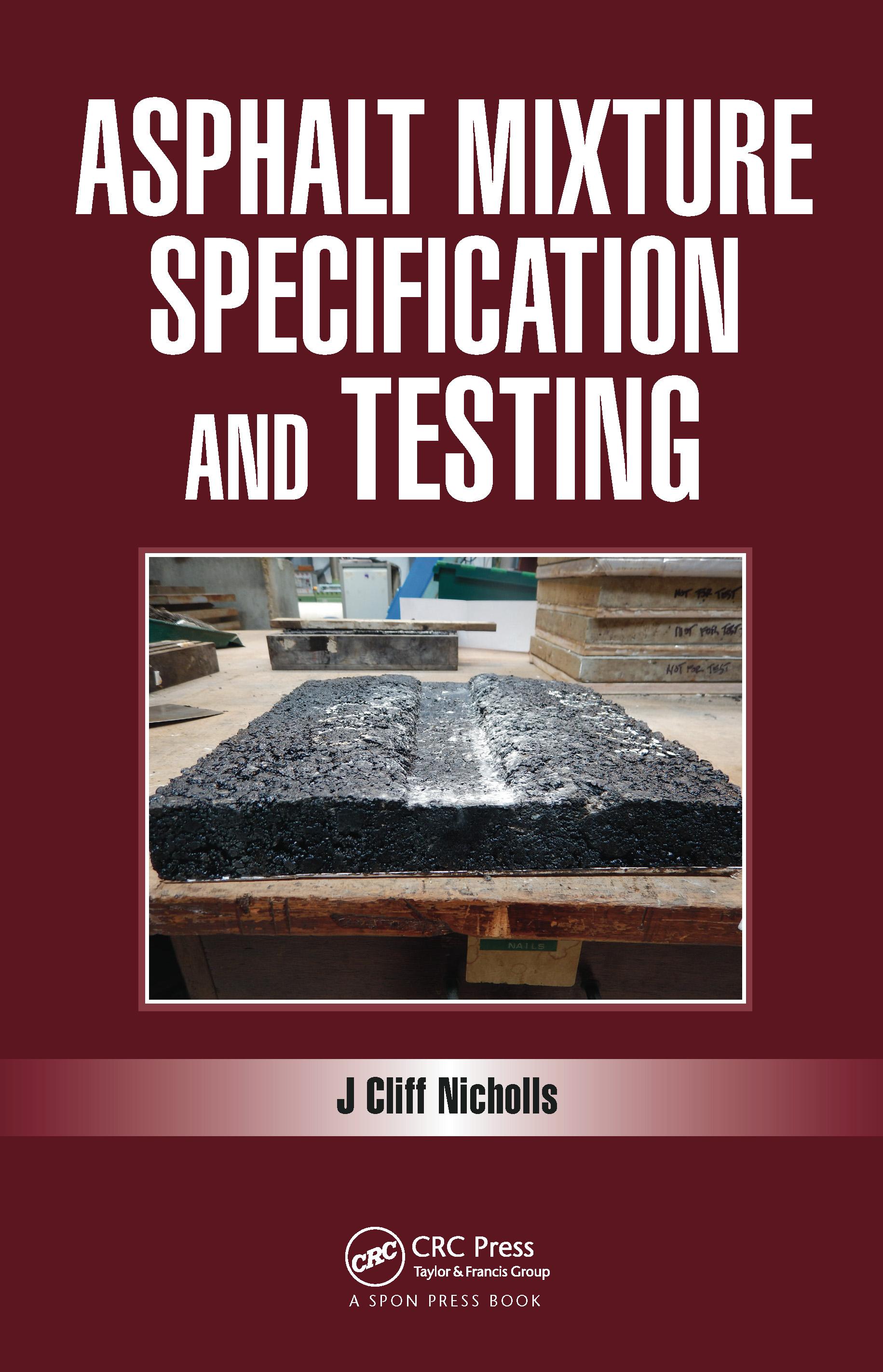
This guide reviews the way asphalt mixture can be specified, with particular emphasis on the test methods used to measure performance. The advantages and limitations of the tests are described for measuring the desired property, and engineers can specify a test according to the material’s use.
The book starts with a resume of specifications and their relative advantages and disadvantages for different situations. Then different properties are discussed in terms of: their specification; the test methods that can be used (primarily the EN 12697 suite of European methods, of which the author has been responsible for drafting); the extent to which the results predict performance; the levels that can be achieved with different asphalt mixes and types; what levels, if any, should be specified in various situations and pavement layers; and which other properties are adversely affected by enhanced performance. The final section covers various aspects of sustainability, with a strong emphasis on durability.
Better understanding should enable clients and consultants who specify pavements to produce durable asphalt pavements more economically, and also help asphalt producers and students trying to understand the black art of asphalt.
Pay easily by card, Klarna, Apple Pay or Google Pay. Not happy? You always have a 14-day money-back guarantee. Read more in our terms. If you have any questions, email us at hello@memmo.org.
Memmo makes studying easier – wherever you are in the world. We bring your course books and smart study tools together in one place: summaries, quizzes, podcasts and flashcards. Plus Ted, your study buddy who answers anything you wonder. Over 50,000 students already study here – built to help you learn faster and stress less.