
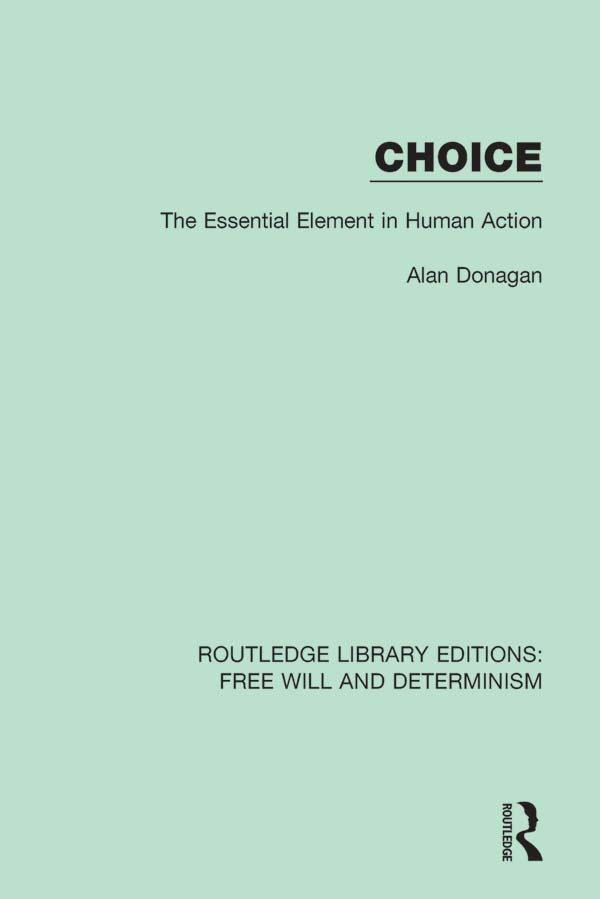
This book, first published in 1987, investigates what distinguishes the part of human behaviour that is action (praxis) from the part that is not. The distinction was clearly drawn by Socrates, and developed by Aristotle and the medievals, but key elements of their work became obscured in modern philosophy, and were not fully recovered when, under Wittgenstein’s influence, the theory of action was revived in analytical philosophy. This study aims to recover those elements, and to analyse them in terms of a defensible semantics on Fregean lines. Among its conclusions: that actions are bodily or mental events that are causally explained by their doers’ propositional attitudes, especially by their choices or fully specific intentions; that choice cannot be reduced to desire and belief, and hence that the traditional concept of will as intellectual appetite must be revived.
Pay easily by card, Klarna, Apple Pay or Google Pay. Not happy? You always have a 14-day money-back guarantee. Read more in our terms. If you have any questions, email us at hello@memmo.org.
Memmo makes studying easier – wherever you are in the world. We bring your course books and smart study tools together in one place: summaries, quizzes, podcasts and flashcards. Plus Ted, your study buddy who answers anything you wonder. Over 50,000 students already study here – built to help you learn faster and stress less.