
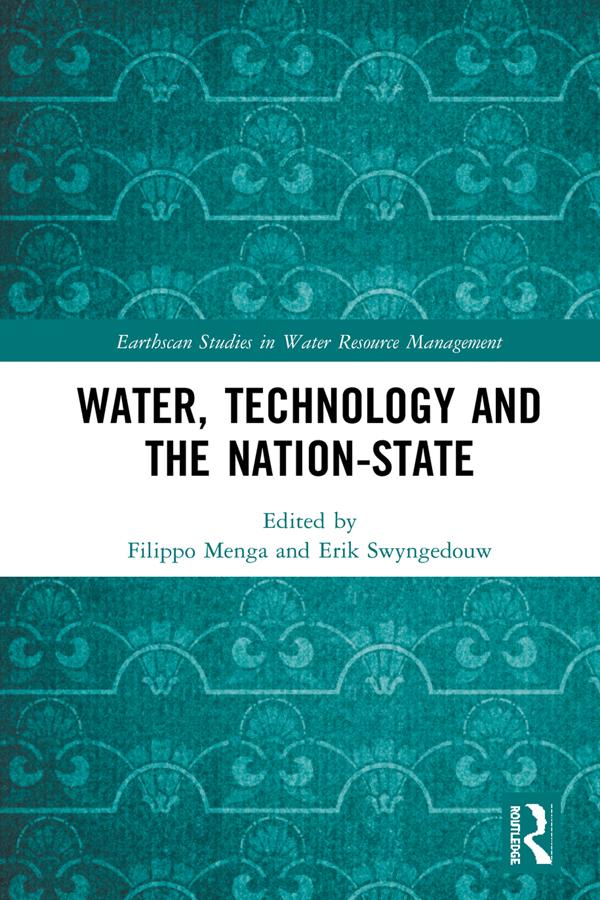
Just as space, territory and society can be socially and politically co-constructed, so can water, and thus the construction of hydraulic infrastructures can be mobilised by politicians to consolidate their grip on power while nurturing their own vision of what the nation is or should become. This book delves into the complex and often hidden connection between water, technological advancement and the nation-state, addressing two major questions. First, the arguments deployed consider how water as a resource can be ideologically constructed, imagined and framed to create and reinforce a national identity, and secondly, how the idea of a nation-state can and is materially co-constituted out of the material infrastructure through which water is harnessed and channelled.
The book consists of 13 theoretical and empirical interdisciplinary chapters covering four continents. The case studies cover a diverse range of geographical areas and countries, including China, Cyprus, Egypt, Ethiopia, France, Nepal and Thailand, and together illustrate that the meaning and rationale behind water infrastructures goes well beyond the control and regulation of water resources, as it becomes central in the unfolding of power dynamics across time and space.
Pay easily by card, Klarna, Apple Pay or Google Pay. Not happy? You always have a 14-day money-back guarantee. Read more in our terms. If you have any questions, email us at hello@memmo.org.
Memmo makes studying easier – wherever you are in the world. We bring your course books and smart study tools together in one place: summaries, quizzes, podcasts and flashcards. Plus Ted, your study buddy who answers anything you wonder. Over 50,000 students already study here – built to help you learn faster and stress less.