
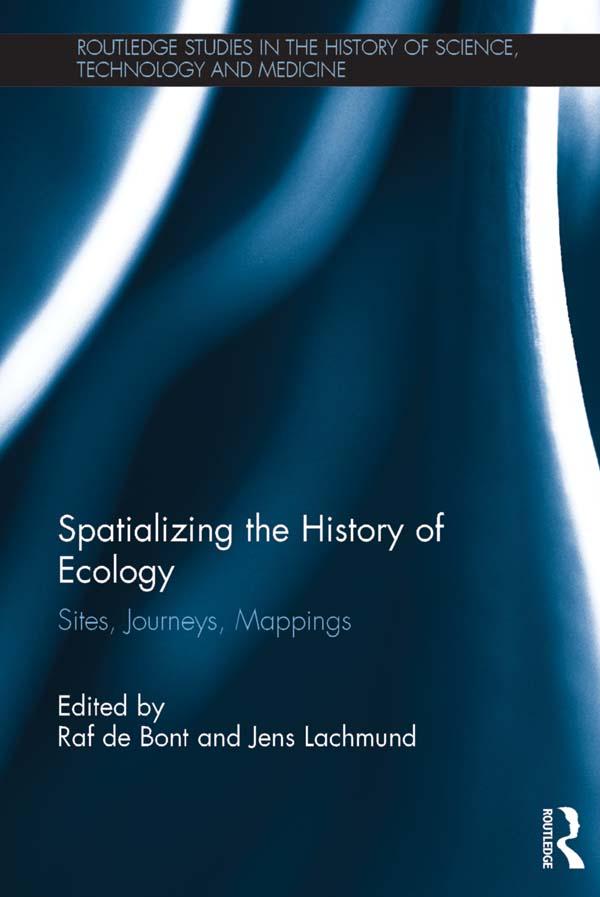
Throughout its history, the discipline of ecology has always been profoundly entangled with the history of space and place. On the one hand, ecology is a field science that has thrived on the study of concrete spatial entities, such as islands, forests or rivers. These spaces are the workplaces in which ecological phenomena are identified, observed and experimented on. They provide both epistemic opportunities and constraints that structure the agenda and the analytical sensibilities of ecological researchers. On the other hand, ecological knowledge and practices have become important resources through which spaces and places are classified, delineated, explained, experienced and managed. The impact of these activities reaches far beyond the realms of the ecological discipline. Many ecological concepts such as "biotopes," "ecosystems" and "the biosphere" have become entities that widely resonate in public life and policy making.
This book explores the mutual entanglement between space and knowledge-making in the history of ecology. Its first goal is to explore to which extent a spatial perspective can shed new light on the history of ecological science. Second, it uses ecology as a critical site to gain broader insights into the history of the environment in the nineteenth and twentieth centuries. Via a series of case studies – discussing topics that range from ecological field stations in the early-twentieth century Caribbean over wisent breeding in Nazi Germany to computer modelling in North American deserts – the book offers a tour through the changing landscapes of modern ecology.
Pay easily by card, Klarna, Apple Pay or Google Pay. Not happy? You always have a 14-day money-back guarantee. Read more in our terms. If you have any questions, email us at hello@memmo.org.
Memmo makes studying easier – wherever you are in the world. We bring your course books and smart study tools together in one place: summaries, quizzes, podcasts and flashcards. Plus Ted, your study buddy who answers anything you wonder. Over 50,000 students already study here – built to help you learn faster and stress less.