
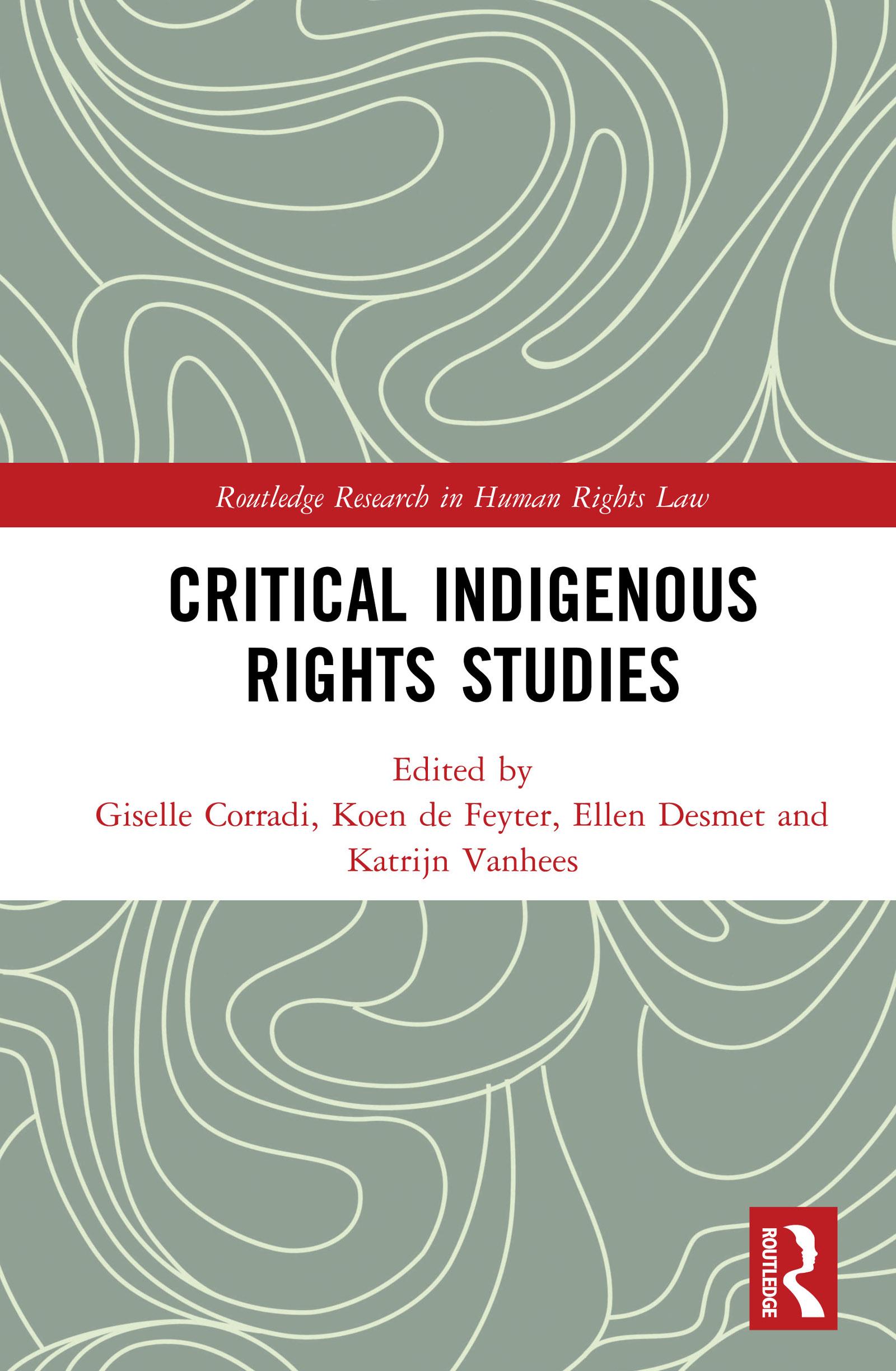
The field of ‘critical indigenous rights studies’ is a complex one that benefits from an interdisciplinary perspective and a realist (as opposed to an idealised) approach to indigenous peoples. This book draws on sociology of law, anthropology, political sciences and legal sciences in order to address emerging issues in the study of indigenous rights and identify directions for future research.
The first part of the volume investigates how changing identities and cultures impact rights protection, analysing how policies on development and land, and processes such as migration, interrelate with the mobilisation of identities and the realisation of rights. In the second part, new approaches related to indigenous peoples’ rights are scrutinised as to their potential and relevance. They include addressing legal tensions from an indigenous peoples’ rights perspective, creating space for counter-narratives on international law and designing new instruments.
Throughout the text, case studies with wide geographical scope are presented, ranging from Latin America (the book’s focus) to Egypt, Rwanda and Scandinavia.
Pay easily by card, Klarna, Apple Pay or Google Pay. Not happy? You always have a 14-day money-back guarantee. Read more in our terms. If you have any questions, email us at hello@memmo.org.
Memmo makes studying easier – wherever you are in the world. We bring your course books and smart study tools together in one place: summaries, quizzes, podcasts and flashcards. Plus Ted, your study buddy who answers anything you wonder. Over 50,000 students already study here – built to help you learn faster and stress less.