
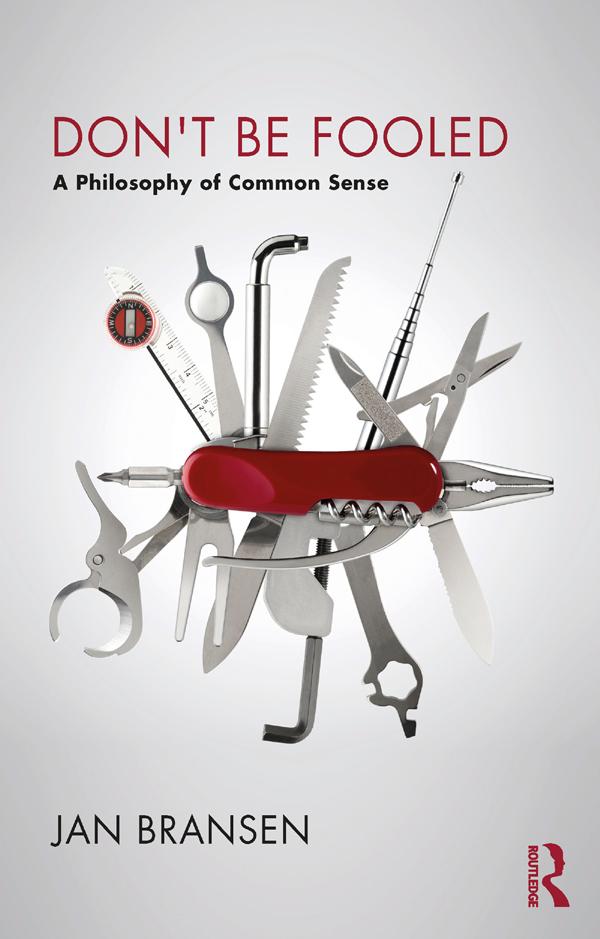
In the debate leading up to the EU referendum in the United Kingdom, the British politician Michael Gove declared that "people in this country have had enough of experts". In the 2016 Presidential campaign in the United States, Donald Trump waged a war against the very idea of expertise. Yet if you are worried about your child's behaviour, don't know which laptop to buy, or just want to get fit, the answer is easy: ask an expert.
Where do we draw the line? Why do we appear to know more and more collectively, yet less and less individually? Has expertise painted itself into a corner? Can we defend both science and common sense?
In this engaging and much-needed book Jan Bransen explores these important questions and more. He argues that the rise of behavioural sciences has caused a sea change in the relationship between science and common sense. He shows how - as recently as the 1960s - common sense and science were allies in the battle against ignorance, but that since then populism and chauvinism have claimed common sense as their own. Bransen argues that common sense is a collection of interrelated skills that draw on both an automatic pilot and an investigative attitude where we ask ourselves the right questions. It is the very attitude of open-minded inquiry and questioning that Bransen believes we are at risk of losing in the face of an army of experts.
Drawing on fascinating examples such as language and communication, money, the imaginary world of Endoxa, domestic violence, and quality of life, Don't be Fooled: A Philosophy of Common Sense is a brilliant and wry defence of a skill that is a vital part of being human.
Pay easily by card, Klarna, Apple Pay or Google Pay. Not happy? You always have a 14-day money-back guarantee. Read more in our terms. If you have any questions, email us at hello@memmo.org.
Memmo makes studying easier – wherever you are in the world. We bring your course books and smart study tools together in one place: summaries, quizzes, podcasts and flashcards. Plus Ted, your study buddy who answers anything you wonder. Over 50,000 students already study here – built to help you learn faster and stress less.