
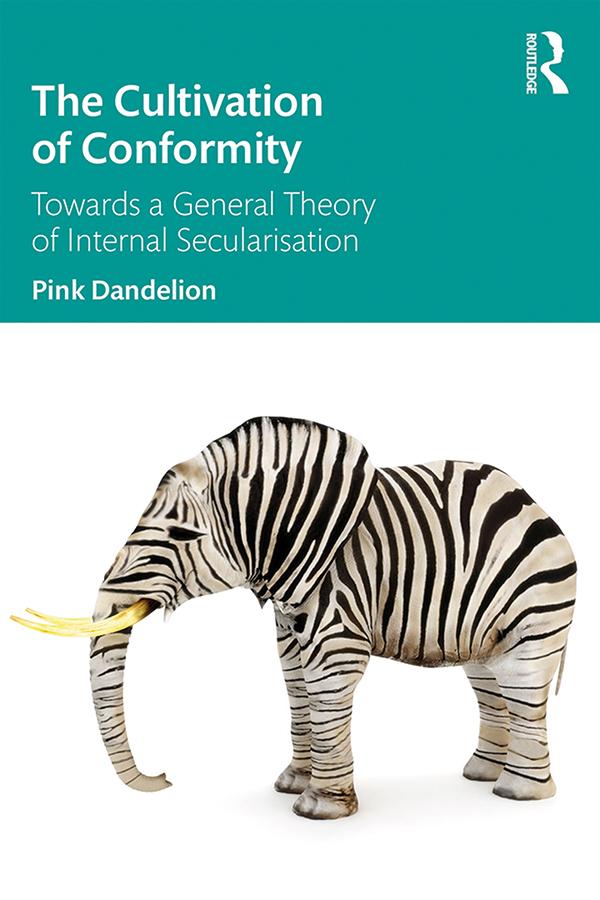
This book explores the inter-relationship between religious groups and wider society and examines the way religious groups change in relation to societal norms, potentially to the point of undergoing processes of ‘internal secularisation’ within secular and secularist cultures. Received sociological wisdom suggests that over time religious groups moderate their claims. This comes with the potential loss of new adherents, for theorists of secularisation suggest unique or universal, rather than moderate, truth claims appear attractive to would-be recruits. At the same time, religious groups need to appear equivalent, in terms of harmlessness, to state-sanctioned religious expression in order to secure rights. Thus, religious organisations face a perpetual conundrum. Using British Quakers as a case study as they moved from a counter-cultural group to an accepted and accepting part of twentieth- and twenty-first-century society, the author builds on models of religion and non-religion in terms of flows and explores the consequences of religious assimilation when the process of constructing both distinctive appeal and ‘harmlessness’ in pursuit of rights is played out in a secular culture. A major contribution to the sociology of religion, The Cultivation of Conformity presents a new theory of internal secularisation as the ultimate stage of the cultivation of conformity, and a model of the way sects and society inter-relate.
Pay easily by card, Klarna, Apple Pay or Google Pay. Not happy? You always have a 14-day money-back guarantee. Read more in our terms. If you have any questions, email us at hello@memmo.org.
Memmo makes studying easier – wherever you are in the world. We bring your course books and smart study tools together in one place: summaries, quizzes, podcasts and flashcards. Plus Ted, your study buddy who answers anything you wonder. Over 50,000 students already study here – built to help you learn faster and stress less.