
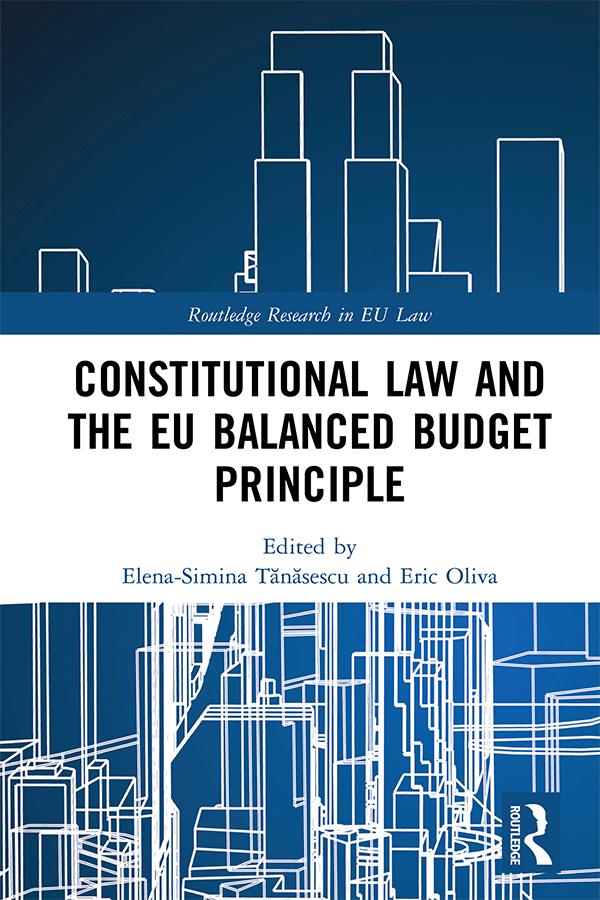
Exploring the balanced budget rule as an economic standard and as a legal principle, this book explains the context and content of the balanced budget rule and presents a critical appraisal of its impact on legal systems, political institutions and social values, and particularly an evaluation of its constitutionalization in the European and national legal systems.
Examining a range of perspectives on the balanced budget rule as a legal principle, a series of chapters investigate the feasibility and effectiveness of the balanced budget rule. The book considers the impact this may have on the separation of powers within the state, on democratic decision-making, on the European social model and on the protection of fundamental social rights within the European Union. It suggests that this impact goes beyond the ethical issue of the public debt considered as a burden placed on future generations, and beyond injunctions imposed by international financial institutions on national public finances. The transfiguration of fiscal discipline from an economic requirement into a legal rule demanding a balanced budget embodies a challenge to the political nature of the budgetary process while creating the flexibility needed in order to further fiscal federalism within the European Union.
This book argues that the balanced budget rule is nothing more than it has always been: an instrument for devising public policies in a rational manner, a tool for conceiving qualitative choices regarding the well-being of citizens.
Pay easily by card, Klarna, Apple Pay or Google Pay. Not happy? You always have a 14-day money-back guarantee. Read more in our terms. If you have any questions, email us at hello@memmo.org.
Memmo makes studying easier – wherever you are in the world. We bring your course books and smart study tools together in one place: summaries, quizzes, podcasts and flashcards. Plus Ted, your study buddy who answers anything you wonder. Over 50,000 students already study here – built to help you learn faster and stress less.