
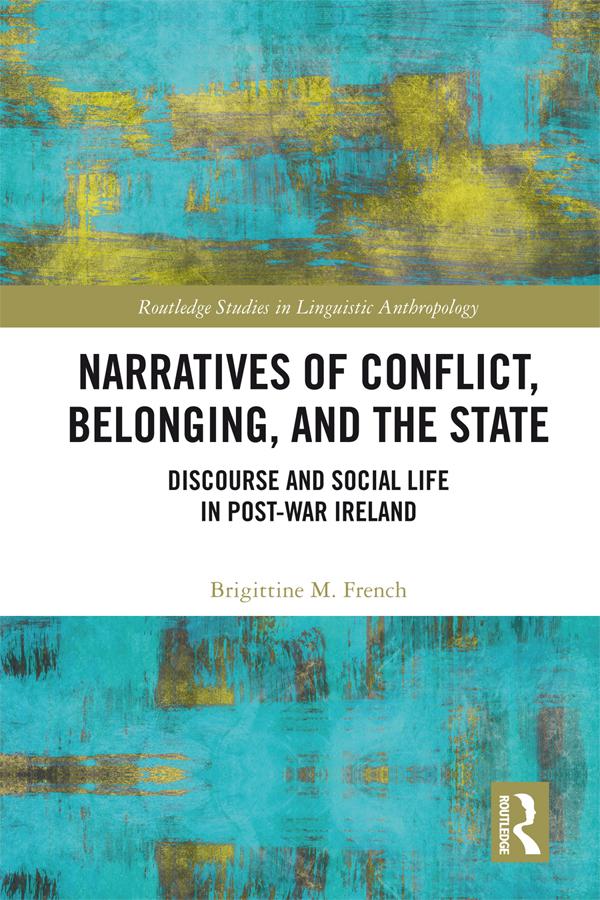
Using key perspectives from Linguistic anthropology the book illuminates how social actors take up the ideals of law, equality, and democratic representation in locally-meaningful ways to make their own national history in ways that may perpetuate violence and inequality. Focusing specifically on post-war conditions in Ireland, the author contextualizes commonplace practices by which citizens are made to learn the gap between official membership in and political belonging to a democratic state. Each chapter takes up a different aspect of state authority and power to constitute citizenship, to enact laws, to mediate conflict, and to create histories in the context of social inequalities and political hostilities. This book is an excellent ethnographic addition to courses in linguistic anthropology, giving readers the opportunity to explore applications and ramifications of key theoretical text within research.
Pay easily by card, Klarna, Apple Pay or Google Pay. Not happy? You always have a 14-day money-back guarantee. Read more in our terms. If you have any questions, email us at hello@memmo.org.
Memmo makes studying easier – wherever you are in the world. We bring your course books and smart study tools together in one place: summaries, quizzes, podcasts and flashcards. Plus Ted, your study buddy who answers anything you wonder. Over 50,000 students already study here – built to help you learn faster and stress less.