
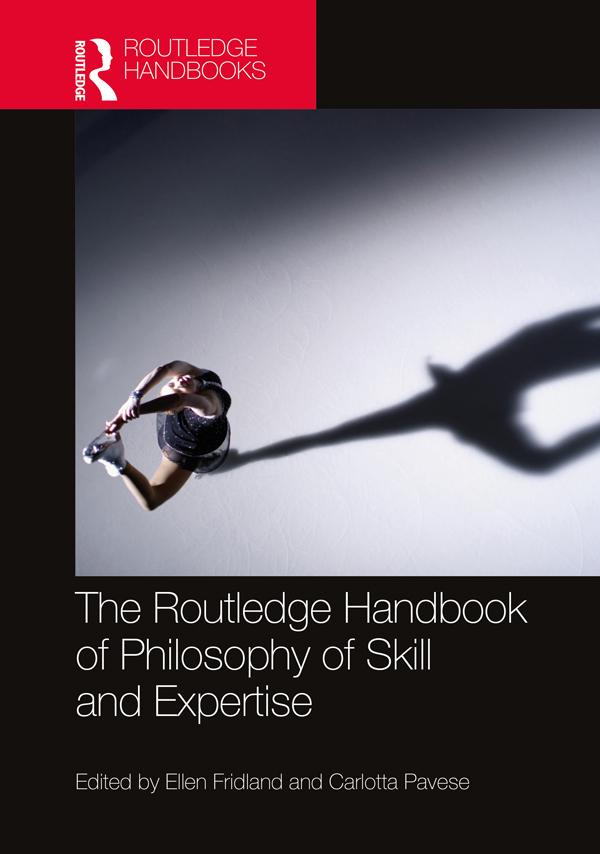
Philosophical questions surrounding skill and expertise can be traced back as far as Ancient Greece, China, and India. In the twentieth century, skilled action was an important factor in the work of phenomenologists such as Heidegger and Merleau-Ponty and analytic philosophers including Gilbert Ryle. However, as a subject in its own right it has, until now, remained largely in the background.
The Routledge Handbook of Philosophy of Skill and Expertise is an outstanding reference source and the first major collection of its kind, reflecting the explosion of interest in the topic in recent years. Comprising thirty-nine chapters written by leading international contributors, the Handbook is organized into six clear parts:
• Skill in the history of philosophy (East and West)
• Skill in epistemology
• Skill, intelligence, and agency
• Skill in perception, imagination, and emotion
• Skill, language, and social cognition
• Skill and expertise in normative philosophy.
Essential reading for students and researchers in philosophy of mind and psychology, epistemology, and ethics, The Routledge Handbook of Philosophy of Skill and Expertise is also suitable for those in related disciplines such as social psychology and cognitive science. It is also relevant to those who are interested in conceptual issues underlying skill and expertise in fields such as sport, the performing arts, and medicine.
Pay easily by card, Klarna, Apple Pay or Google Pay. Not happy? You always have a 14-day money-back guarantee. Read more in our terms. If you have any questions, email us at hello@memmo.org.
Memmo makes studying easier – wherever you are in the world. We bring your course books and smart study tools together in one place: summaries, quizzes, podcasts and flashcards. Plus Ted, your study buddy who answers anything you wonder. Over 50,000 students already study here – built to help you learn faster and stress less.