
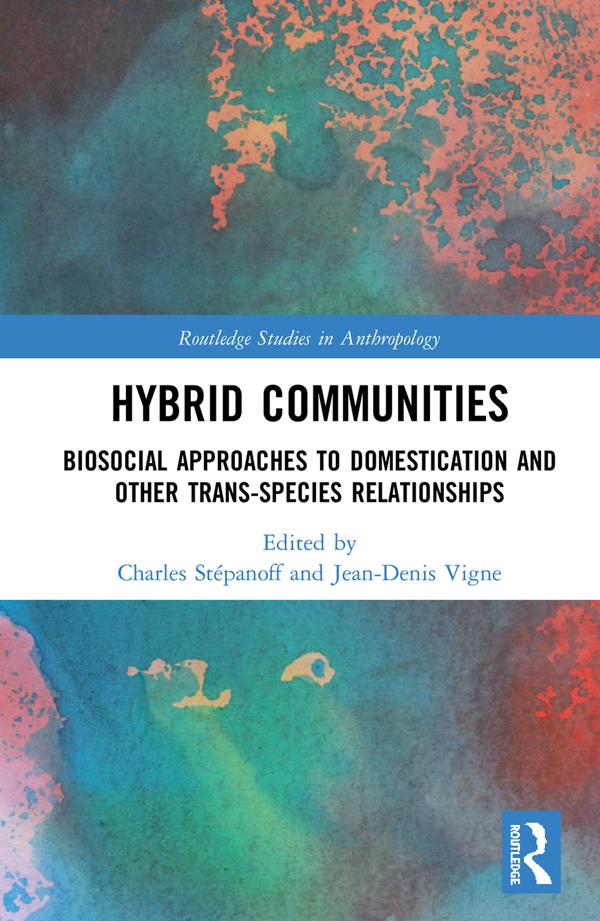
Domestication challenges our understanding of human-environment relationships because it blurs the dichotomy between what is artificial and what is natural. In domestication, biological evolution, environmental change, techniques and practices, anthropological trajectories and sociocultural choices are inextricably interconnected. Domestication is essentially a hybrid phenomenon that needs to be explored with hybrid scientific approaches.
Hybrid Communities: Biosocial Approaches to Domestication and Other Trans-species Relationships attempts for the first time to explore domestication viewed from across disciplines both in its origins and as an ongoing process. This edited collection proposes new biosocial approaches and concepts which integrate the methods of social sciences, archaeology and biology to shed new light on domestication in diachrony and in synchrony.
This book will be of great interest to all scholars working on human-environment relationships, and should also attract readers from the fields of social anthropology, archaeology, genetics, ecology, botany, zoology, history and philosophy.
Pay easily by card, Klarna, Apple Pay or Google Pay. Not happy? You always have a 14-day money-back guarantee. Read more in our terms. If you have any questions, email us at hello@memmo.org.
Memmo makes studying easier – wherever you are in the world. We bring your course books and smart study tools together in one place: summaries, quizzes, podcasts and flashcards. Plus Ted, your study buddy who answers anything you wonder. Over 50,000 students already study here – built to help you learn faster and stress less.