
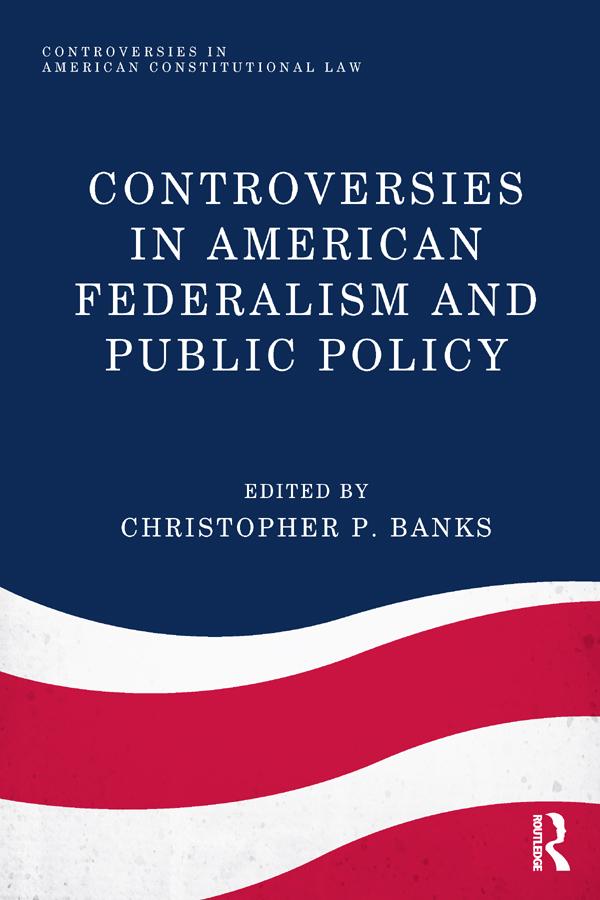
This interdisciplinary collection presents a scholarly treatment of how the constitutional politics of federalism affect governments and citizens, offering an accessible yet comprehensive analysis of the U.S. Supreme Court’s federalism jurisprudence and its effect on the development of national and state policies in key areas of constitutional jurisprudence. The contributors address the impact that Supreme Court federalism precedents have in setting the parameters of national law and policies that the states are often bound to respect under constitutional law, including those that relate to the scope and application of gun rights, LGBT freedoms, health care administration, anti-terrorism initiatives, capital punishment, immigration and environmental regulation, the legalization of marijuana and voting rights.
Uniting scholarship in law, political science, criminology, and public administration, the chapters study the themes, principles, and politics that traditionally have been at the center of federalism research across different academic disciplines. They look at the origins, nature and effect of dual and cooperative federalism, presidential powers and administrative regulation, state sovereignty and states’ rights, judicial federalism and the advocacy of organized interests.
Pay easily by card, Klarna, Apple Pay or Google Pay. Not happy? You always have a 14-day money-back guarantee. Read more in our terms. If you have any questions, email us at hello@memmo.org.
Memmo makes studying easier – wherever you are in the world. We bring your course books and smart study tools together in one place: summaries, quizzes, podcasts and flashcards. Plus Ted, your study buddy who answers anything you wonder. Over 50,000 students already study here – built to help you learn faster and stress less.