
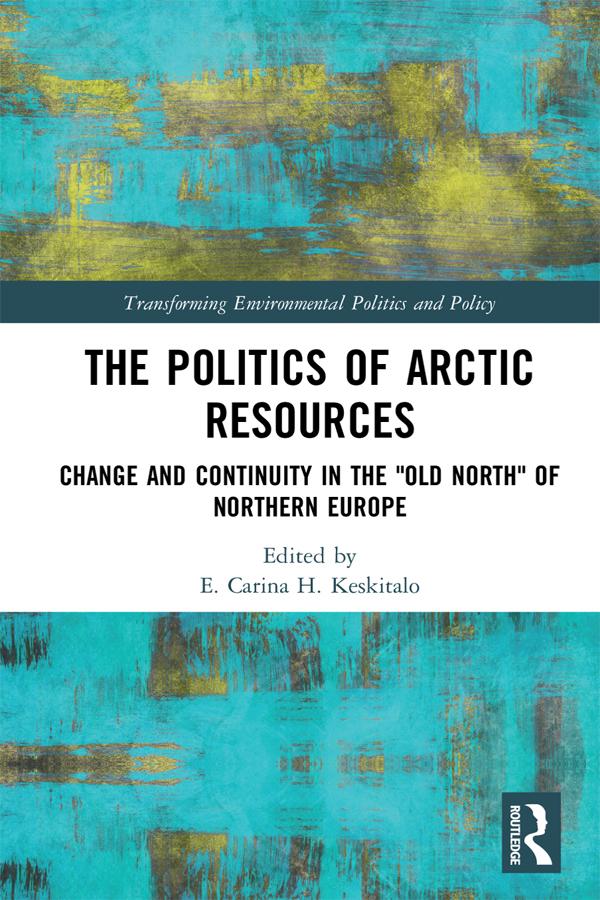
The Arctic has often been seen as a natural area, or even a “wilderness”, where mainly indigenous and subsistence activities have been prominent. Contrary to this, the present volume highlights the very long historical development of resource use systems in northern Europe, across multiple actors and multiple levels, and including varying population groups.
The book takes a past-present-future perspective that illustrates the paths to institutional emergence, change or persistence over time. It also illustrates how institutions may themselves drive changes, through a focus on resource use cases in northern Europe. This volume demonstrates that understanding “northern” issues is less about understanding sets of geophysical, climatological or environmental conditions than about understanding social and institutional structures. Understanding these trajectories into the future is seen as a key way of understanding what responses to future change may be likely and what the institutions are that will shape, limit or enable our responses to climate change.
This book will be of great use to scholars and graduates in the fields of Arctic and northern-region politics, and to researchers of resource use and climate change with a focus on vulnerability, social vulnerability, adaptation and mitigation.
Pay easily by card, Klarna, Apple Pay or Google Pay. Not happy? You always have a 14-day money-back guarantee. Read more in our terms. If you have any questions, email us at hello@memmo.org.
Memmo makes studying easier – wherever you are in the world. We bring your course books and smart study tools together in one place: summaries, quizzes, podcasts and flashcards. Plus Ted, your study buddy who answers anything you wonder. Over 50,000 students already study here – built to help you learn faster and stress less.