
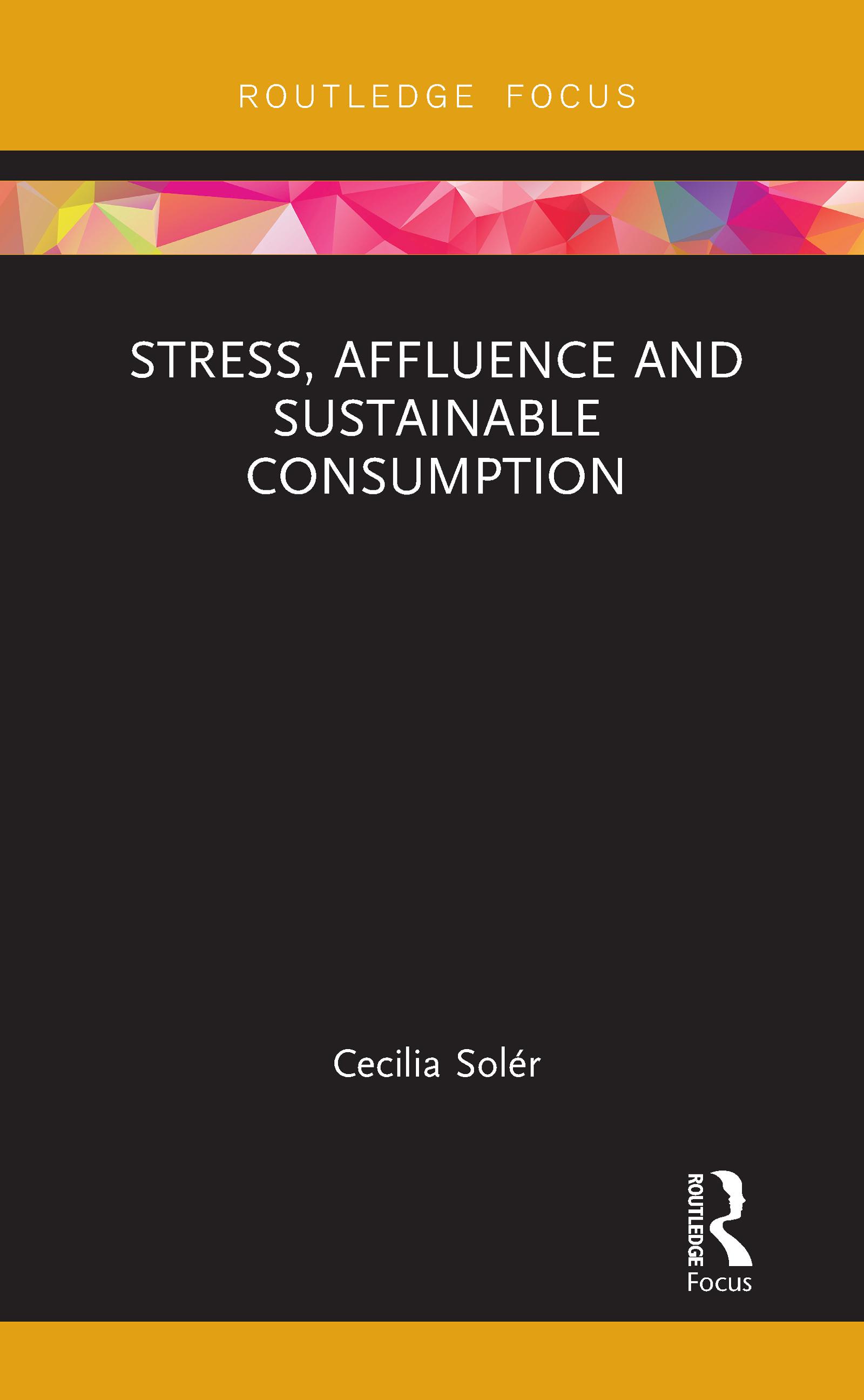
Why do affluent consumers almost automatically acquire new versions or variations of products already at their disposal? Even though most of us know that this novelty consumption poses a serious threat to an environmentally and socially sustainable future, we continue to do it. Why?
Research shows that consumption of new automobiles, clothing, furniture, electronics, home furnishing, household apparel, mobile phones, etc., is motivated by a desire to feel more secure, less anxious and better mood-wise. Affluent consumers seem to engage in novelty consumption not to feel better but rather to avoid feeling bad. Stress, Affluence and Sustainable Consumption discusses sustainable consumption from a stress perspective, adding an embodied understanding to the sustainability-related consumption challenges that we face today.
A stress perspective on affluent consumption differs from current understandings on consumption, as it fully acknowledges the consumer as having a body (including a mind) that reacts to the numerous product offerings and retail spaces, both physical and online. A stress perspective can explain how our bodies try to cope with an overload of perceptual input provided by advertising messages, product launches and even store structures.
This book will be of great interest to students and researchers of consumer psychology, sustainable consumption studies, sustainable marketing and markets as well as sustainable development more generally.
Pay easily by card, Klarna, Apple Pay or Google Pay. Not happy? You always have a 14-day money-back guarantee. Read more in our terms. If you have any questions, email us at hello@memmo.org.
Memmo makes studying easier – wherever you are in the world. We bring your course books and smart study tools together in one place: summaries, quizzes, podcasts and flashcards. Plus Ted, your study buddy who answers anything you wonder. Over 50,000 students already study here – built to help you learn faster and stress less.