
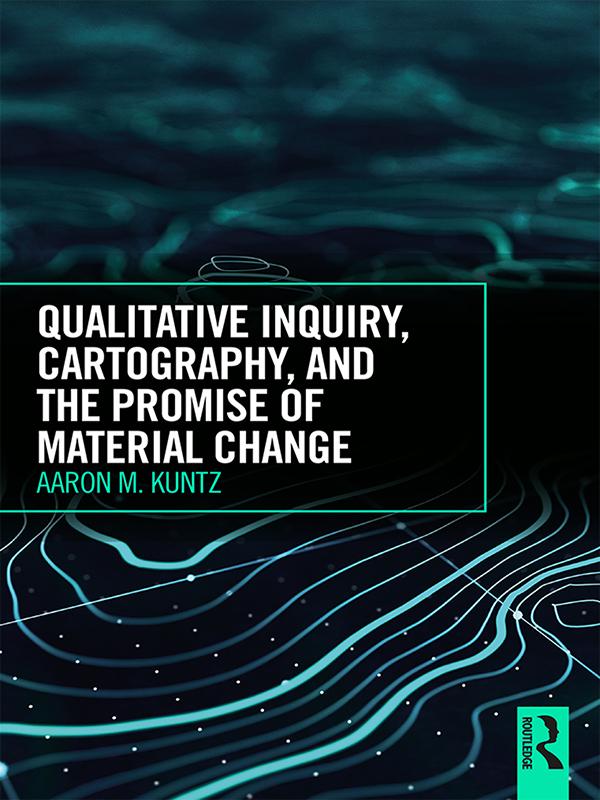
What are the problems to which materialist methodologies are posed as a solution? In this book, Aaron M. Kuntz maps the impact of materialism on contemporary practices of inquiry in education and the social sciences. Through this work, the author challenges readers to consider inquiry as a mode of ethically engaged citizenship with implications for resisting our contemporary moment towards a more equitable future.
The author engages his own inquiry as radical cartographic work, drawing forth distinctions between dialectical and dialogic formations of materialism in order to develop what he terms relational materialism—an engaged orientation to living that dwells in the entangled relations of affirmative ethics and enduring practices of resistance and refusal. Drawing upon examples from higher education, contemporary culture, and normative assumptions of governance, the author considers the potential that we might generate living alternatives to the contemporary status quo; daily practices no longer dependent on binary division or standardized calculations of what "matters." As such, the author advocates for practices of virtuous inquiry (future-orientated ethical assertions of what one should do) that orient inquiry as materially ethical activity.
Despite the often-overwhelming state of inequity and exploitation in our contemporary world, Kuntz generates an affirmative ethical stance that we can become relationally different, guided by a virtuous determination to articulate inquiry as the cartographic work of disruption and imagination. This text will prove valuable to graduate students and faculty who take inquiry seriously and seek the means to understand their work as engaged in the necessary challenge for material change.
Pay easily by card, Klarna, Apple Pay or Google Pay. Not happy? You always have a 14-day money-back guarantee. Read more in our terms. If you have any questions, email us at hello@memmo.org.
Memmo makes studying easier – wherever you are in the world. We bring your course books and smart study tools together in one place: summaries, quizzes, podcasts and flashcards. Plus Ted, your study buddy who answers anything you wonder. Over 50,000 students already study here – built to help you learn faster and stress less.