
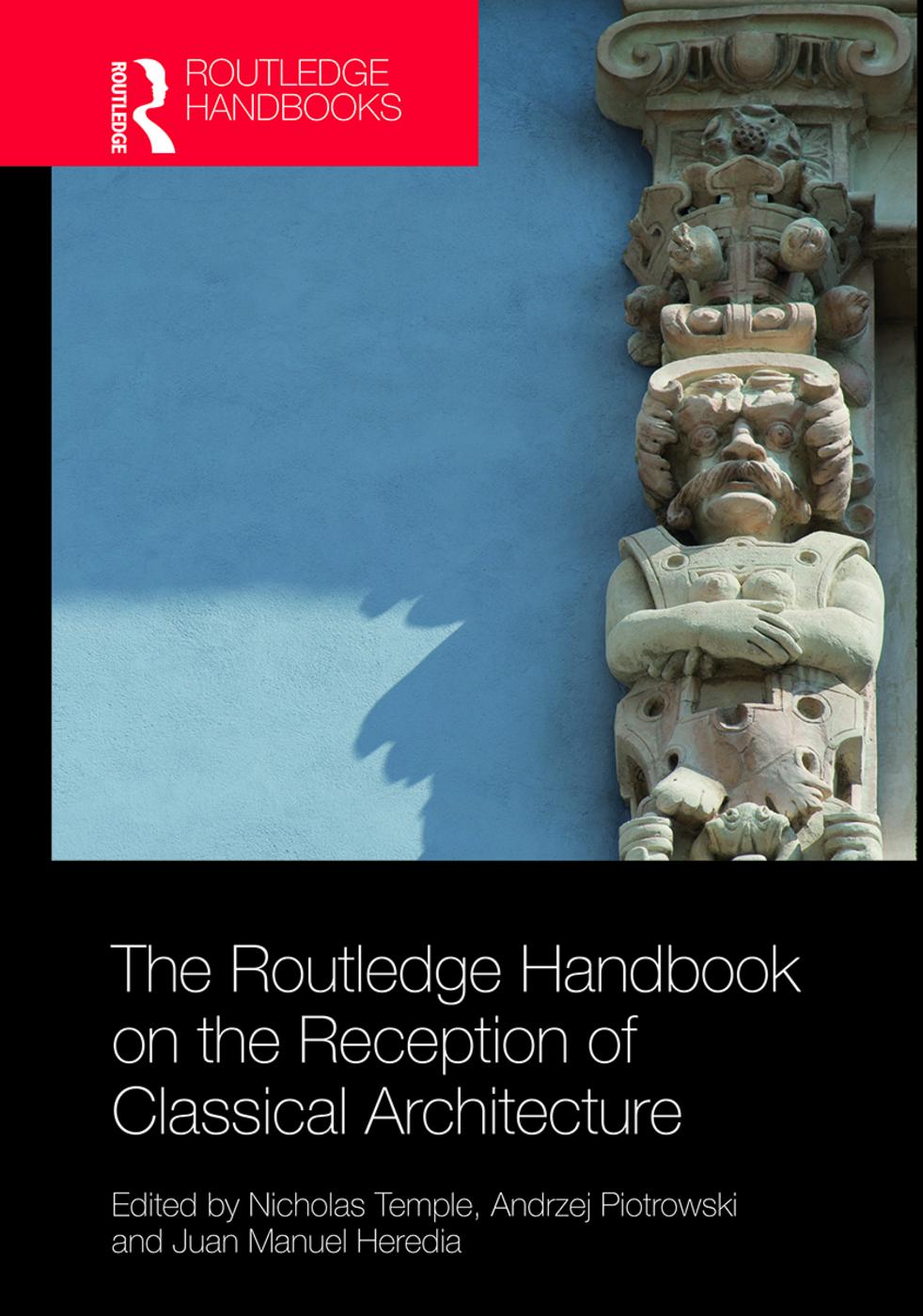
This is the first comprehensive study of the reception of classical architecture in different regions of the world. Exploring the impact of colonialism, trade, slavery, religious missions, political ideology and intellectual/artistic exchange, the authors demonstrate how classical principles and ideas were disseminated and received across the globe. By addressing a number of contentious or unresolved issues highlighted in some historical surveys of architecture, the chapters presented in this volume question long-held assumptions about the notion of a universally accepted ‘classical tradition’ and its broadly Euro-centric perspective.
Featuring thirty-two chapters written by international scholars from China, Europe, Turkey, North America, Mexico, Australia and New Zealand, the book is divided into four sections: 1) Transmission and re-conceptualisation of classical architecture; 2) Classical influence through colonialism, political ideology and religious conversion; 3) Historiographical surveys of geographical regions; and 4) Visual and textual discourses. This fourfold arrangement of chapters provides a coherent structure to accommodate different perspectives of classical reception across the world, and their geographical, ethnographic, ideological, symbolic, social and cultural contexts. Essays cover a wide geography and include studies in Italy, France, England, Scotland, the Nordic countries, Greece, Austria, Portugal, Romania, Germany, Poland, India, Singapore, China, the USA, Mexico, Brazil, New Zealand and Australia. Other essays in the volume focus on thematic issues or topics pertaining to classical architecture, such as ornament, spolia, humanism, nature, moderation, decorum, heresy and taste.
An essential reference guide, The Routledge Handbook on the Reception of Classical Architecture makes a major contribution to the study of architectural history in a new global context.
Pay easily by card, Klarna, Apple Pay or Google Pay. Not happy? You always have a 14-day money-back guarantee. Read more in our terms. If you have any questions, email us at hello@memmo.org.
Memmo makes studying easier – wherever you are in the world. We bring your course books and smart study tools together in one place: summaries, quizzes, podcasts and flashcards. Plus Ted, your study buddy who answers anything you wonder. Over 75,000 students already study here – built to help you learn faster and stress less.