
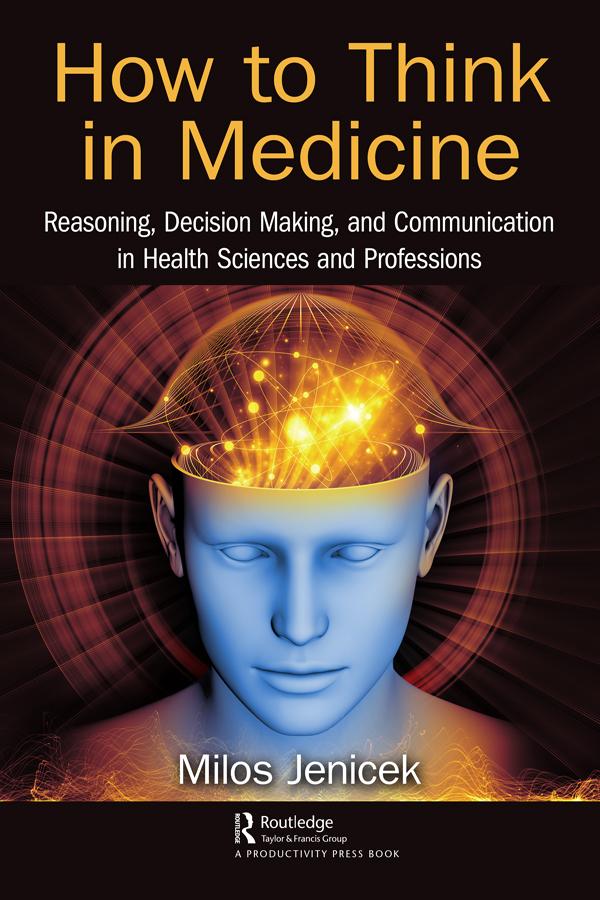
Mastery of quality health care and patient safety begins as soon as we open the hospital doors for the first time and start acquiring practical experience. The acquisition of such experience includes much more than the development of sensorimotor skills and basic knowledge of sciences. It relies on effective reason, decision making, and communication shared by all health professionals, including physicians, nurses, dentists, pharmacists, and administrators.
How to Think in Medicine, Reasoning, Decision Making, and Communications in Health Sciences is about these essential skills. It describes how physicians and health professionals reason, make decision, and practice medicine. Covering the basic considerations related to clinical and caregiver reasoning, it lays out a roadmap to help those new to health care as well as seasoned veterans overcome the complexities of working for the well-being of those who trust us with their physical and mental health.
This book provides a step-by-step breakdown of the reasoning process for clinical work and clinical care. It examines both the general and medical ways of thinking, reasoning, argumentation, fact finding, and using evidence. It explores the principles of formal logic as applied to clinical problems and the use of evidence in logical reasoning. In addition to outline the fundamentals of decision making, it integrates coverage of clinical reasoning risk assessment, diagnosis, treatment, and prognosis in evidence-based medicine.
Presented in four sections, this book discusses the history and position of the problem and the challenge of medical thinking; provides the philosophy interfacing topics of interest for health sciences professionals including the probabilities, uncertainties, risks, and other quantifications in health by steps of clinical work; decision making in clinical and community health care, research, and practice; Communication in clinical and community care including how to write medical articles, clinical case studies and case reporting, and oral and written communication in clinical and community practice and care.
Pay easily by card, Klarna, Apple Pay or Google Pay. Not happy? You always have a 14-day money-back guarantee. Read more in our terms. If you have any questions, email us at hello@memmo.org.
Memmo makes studying easier – wherever you are in the world. We bring your course books and smart study tools together in one place: summaries, quizzes, podcasts and flashcards. Plus Ted, your study buddy who answers anything you wonder. Over 50,000 students already study here – built to help you learn faster and stress less.