
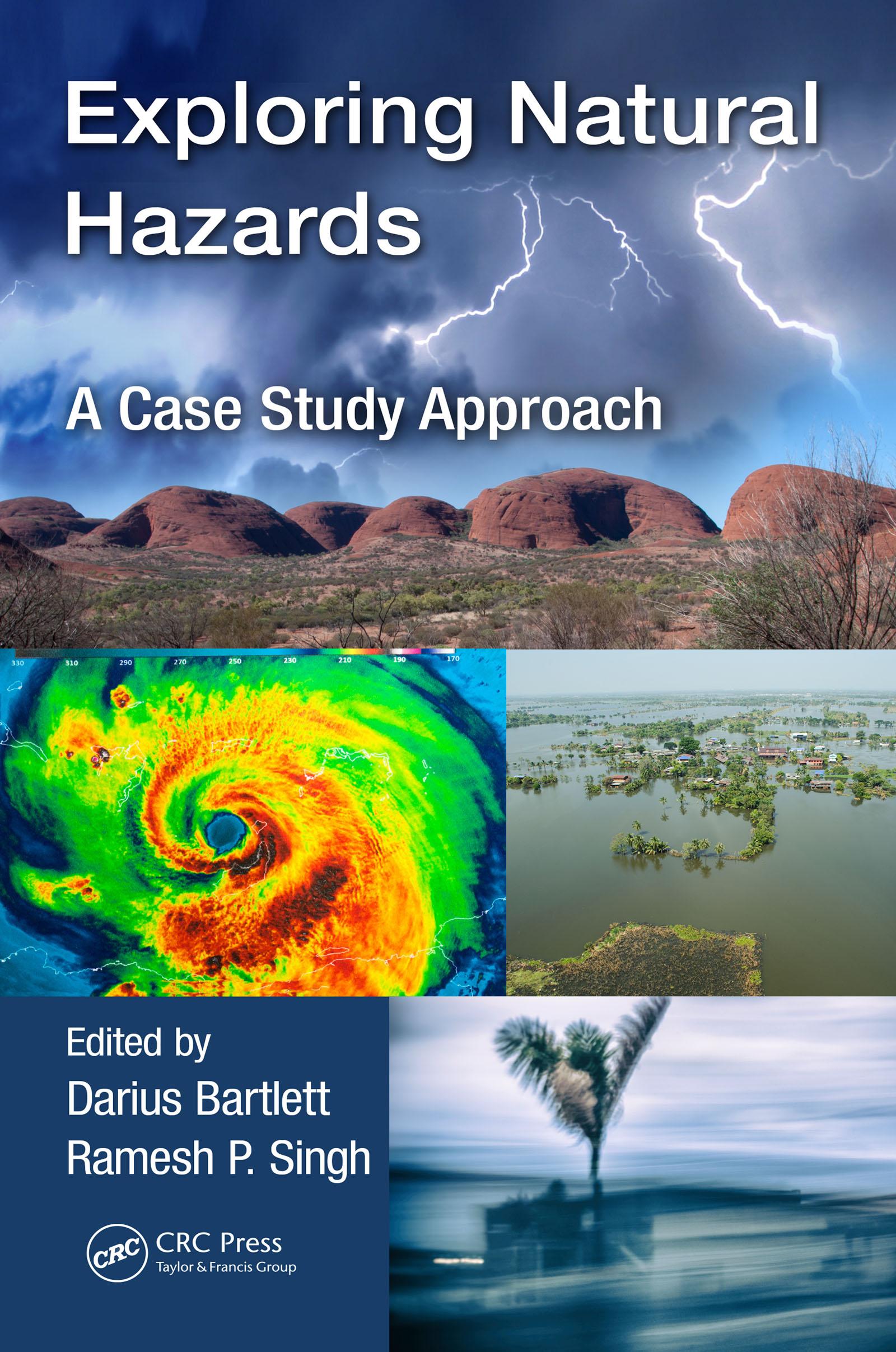
The Sendai Framework for Disaster Risk Reduction 2015–2030 has identified four priority areas for Disaster Risk Reduction: understanding disaster risk; strengthening disaster risk governance to manage disaster risk; investing in disaster risk reduction for resilience and enhancing disaster preparedness for effective response; and to "Build Back Better" in recovery, rehabilitation and reconstruction. Although tremendous progress has been made in recent decades in understanding the workings of the Earth systems and, in particular, its impacts on and responses to human actions, there remains a continuing and pressing need for knowledge that will allow society to simultaneously reduce exposure to global environmental hazards, while also meeting economic development goals. Exploring Natural Hazards: A Case Study Approach, contributes to the knowledge showcasing advanced practices for the monitoring of natural hazards.
Through each case study, the book examines mainly hazards arising from processes within the hydrosphere and atmosphere, triggered or exacerbated by inputs to and transfers of energy between environmental components. It discusses the causes of these phenomena, and ways in which improved policy making, sometimes coupled with the application of appropriate modern technologies, can help to reduce people’s exposure to harm.
Discussing challenges, lessons learned and recommendations, this book provides a snapshot of issues related to tropical cyclones and typhoons, desertification, floods, lightning as a hazard and the need for alert systems. It is a valuable resource for practitioners and professionals alike, for researchers, students and others who work at the intersection between environmental hazards, sustainable development and social justice.
Pay easily by card, Klarna, Apple Pay or Google Pay. Not happy? You always have a 14-day money-back guarantee. Read more in our terms. If you have any questions, email us at hello@memmo.org.
Memmo makes studying easier – wherever you are in the world. We bring your course books and smart study tools together in one place: summaries, quizzes, podcasts and flashcards. Plus Ted, your study buddy who answers anything you wonder. Over 50,000 students already study here – built to help you learn faster and stress less.