
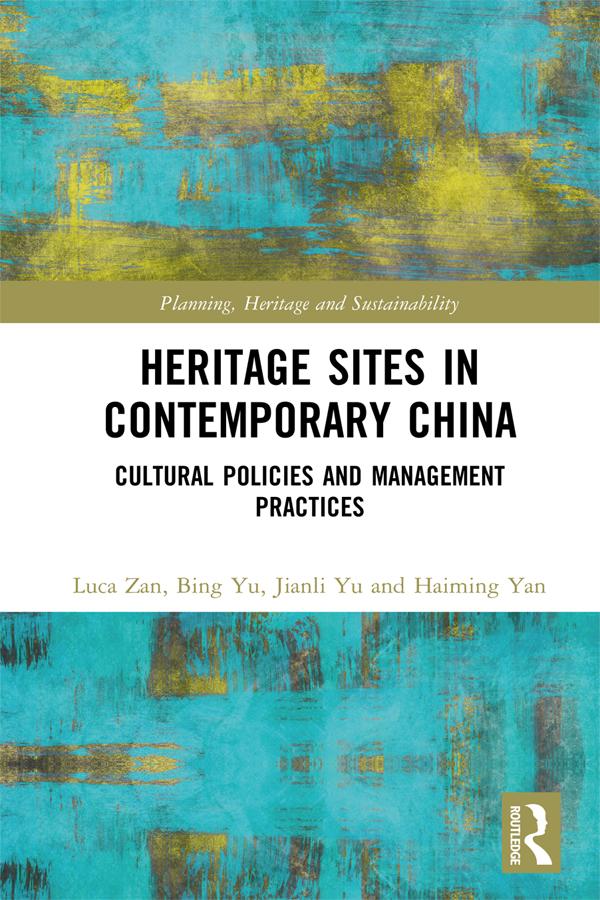
Heritage Sites in Contemporary China: Cultural Policies and Management Practices focuses on cultural heritage policies in China emerging in the period of the 11th and 12th Five Year Plans. Various important Chinese sites across China are investigated, including Luoyang Sui, Daming Gong, Niuheliang, Xinjiang, and Nanyuewang through the dual perspective of archaeological debate and as a case study of policy making. It explores the relationship between policy and the institutional and administrative conditions, such as budgeting and land concerns, which affect it. Building on the research project implemented by the China Academy for Cultural Heritage (CACH) from 2012–2014, which focused on the impact of the Dayizhi Policy for Great Archaeological Sites, the book provides an interdisciplinary insider’s approach to viewing archaeological discoveries; policies and emerging practices in site and archaeological management; and public administration in China. Featuring contributions from experts within CACH and from the Chinese community of archaeologists, and including numerous tables, data and maps, it will appeal to researchers and scholars in disciplines such as archaeology, heritage management, public administration, and policy making.
Pay easily by card, Klarna, Apple Pay or Google Pay. Not happy? You always have a 14-day money-back guarantee. Read more in our terms. If you have any questions, email us at hello@memmo.org.
Memmo makes studying easier – wherever you are in the world. We bring your course books and smart study tools together in one place: summaries, quizzes, podcasts and flashcards. Plus Ted, your study buddy who answers anything you wonder. Over 75,000 students already study here – built to help you learn faster and stress less.