
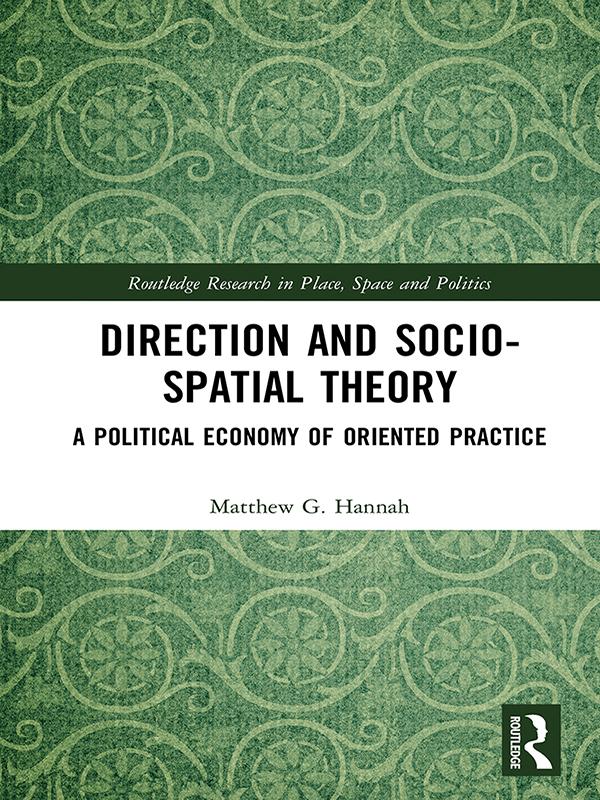
The embodied directedness of human practice has long been neglected in critical socio-spatial theory, in favor of analyses focused upon distance and proximity. This book illustrates the absence of a sense for direction in much theoretical discourse and lays important groundwork for redressing this lacuna in socio-spatial theory.
Many accounts of the social world are incomplete, or are increasingly out of step with recent developments of neoliberal capitalism. Not least through new technological mediations of production and consumption, the much-discussed waning of the importance of physical distance has been matched by the increasing centrality of turning from one thing to another as a basic way in which lives are structured and occupied. A sensibility for embodied processes of turning, and for phenomena of direction more generally, is urgently needed. Chapters develop wide-ranging and original engagements with the arguments of Sara Ahmed, Jonathan Beller, Edmund Husserl, Martin Heidegger, Virginia Held, Bernard Stiegler, Theodore Schatzki, Rahel Jaeggi, Hartmut Rosa and David Harvey.
This book reinterprets practice, embodiment, alienation, reification, social reproduction and ethical responsibility from a directional perspective. It will be a new valuable resource and reference for political and social geography students, as well as sociologists and anthropologists.
Pay easily by card, Klarna, Apple Pay or Google Pay. Not happy? You always have a 14-day money-back guarantee. Read more in our terms. If you have any questions, email us at hello@memmo.org.
Memmo makes studying easier – wherever you are in the world. We bring your course books and smart study tools together in one place: summaries, quizzes, podcasts and flashcards. Plus Ted, your study buddy who answers anything you wonder. Over 50,000 students already study here – built to help you learn faster and stress less.