
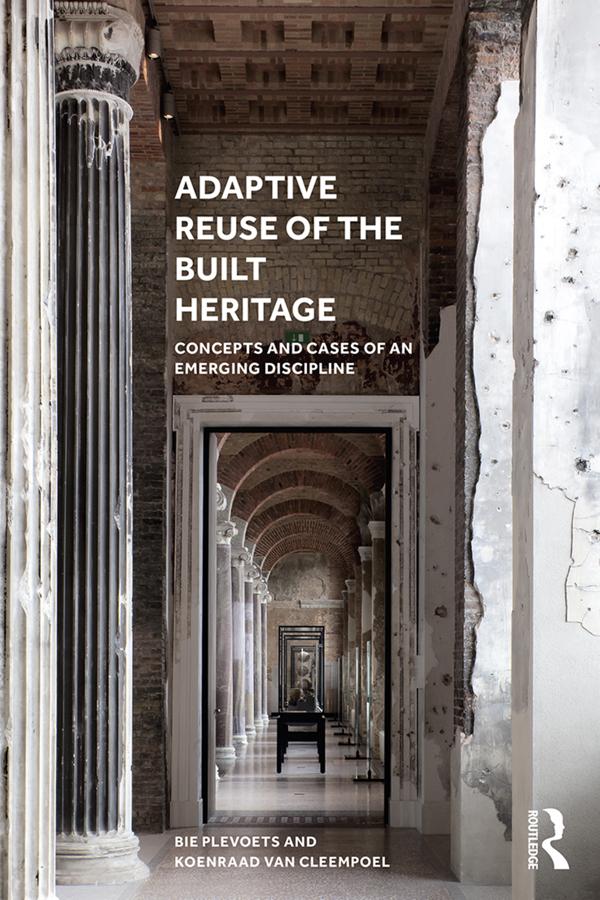
Adaptive reuse – the process of repairing and restoring existing buildings for new or continued use – is becoming an essential part of architectural practice. As mounting demographic, economic, and ecological challenges limit opportunities for new construction, architects increasingly focus on transforming and adapting existing buildings.
This book introduces adaptive reuse as a new discipline. It provides students and professionals with the understanding and the tools they need to develop innovative and creative approaches, helping them to rethink and redesign existing buildings – a skill which is becoming more and more important. Part I outlines the history of adaptive reuse and explains the concepts and methods that lie behind new design processes and contemporary practice. Part II consists of a wide range of case studies, representing different time periods and strategies for intervention. Iconic adaptive reuse projects such as the Caixa Forum in Madrid and the Rijksmuseum in Amsterdam are discussed alongside less famous and spontaneous transformations such as the Kunsthaus Tacheles in Berlin, in addition to projects from Italy, Spain, Croatia, Belgium, Poland, and the USA.
Featuring over 100 high-quality color illustrations, Adaptive Reuse of the Built Heritage is essential reading for students and professionals in architecture, interior design, heritage conservation, and urban planning.
Pay easily by card, Klarna, Apple Pay or Google Pay. Not happy? You always have a 14-day money-back guarantee. Read more in our terms. If you have any questions, email us at hello@memmo.org.
Memmo makes studying easier – wherever you are in the world. We bring your course books and smart study tools together in one place: summaries, quizzes, podcasts and flashcards. Plus Ted, your study buddy who answers anything you wonder. Over 50,000 students already study here – built to help you learn faster and stress less.