
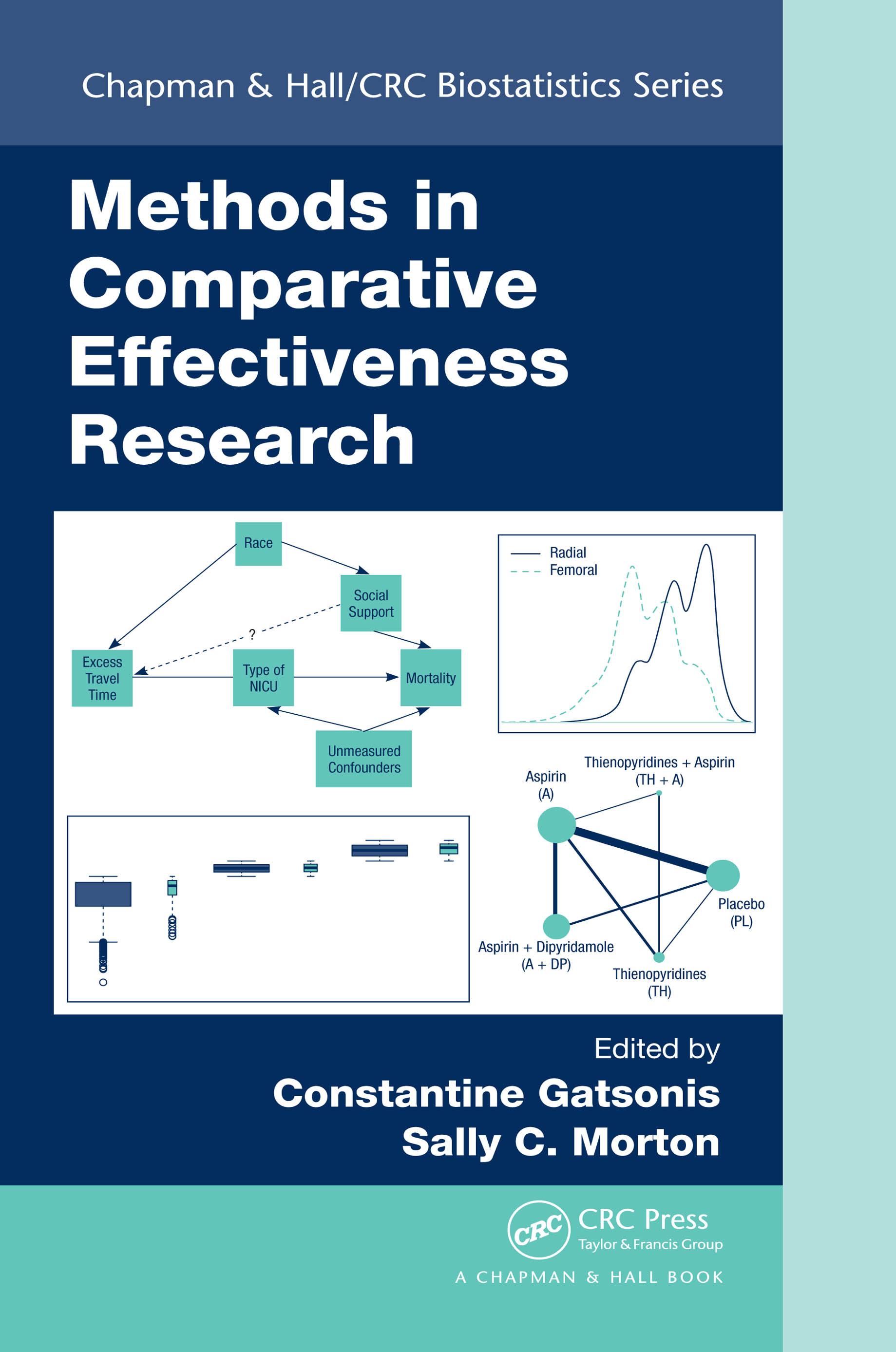
Comparative effectiveness research (CER) is the generation and synthesis of evidence that compares the benefits and harms of alternative methods to prevent, diagnose, treat, and monitor a clinical condition or to improve the delivery of care (IOM 2009). CER is conducted to develop evidence that will aid patients, clinicians, purchasers, and health policy makers in making informed decisions at both the individual and population levels. CER encompasses a very broad range of types of studies—experimental, observational, prospective, retrospective, and research synthesis.
This volume covers the main areas of quantitative methodology for the design and analysis of CER studies. The volume has four major sections—causal inference; clinical trials; research synthesis; and specialized topics. The audience includes CER methodologists, quantitative-trained researchers interested in CER, and graduate students in statistics, epidemiology, and health services and outcomes research. The book assumes a masters-level course in regression analysis and familiarity with clinical research.
Pay easily by card, Klarna, Apple Pay or Google Pay. Not happy? You always have a 14-day money-back guarantee. Read more in our terms. If you have any questions, email us at hello@memmo.org.
Memmo makes studying easier – wherever you are in the world. We bring your course books and smart study tools together in one place: summaries, quizzes, podcasts and flashcards. Plus Ted, your study buddy who answers anything you wonder. Over 50,000 students already study here – built to help you learn faster and stress less.