
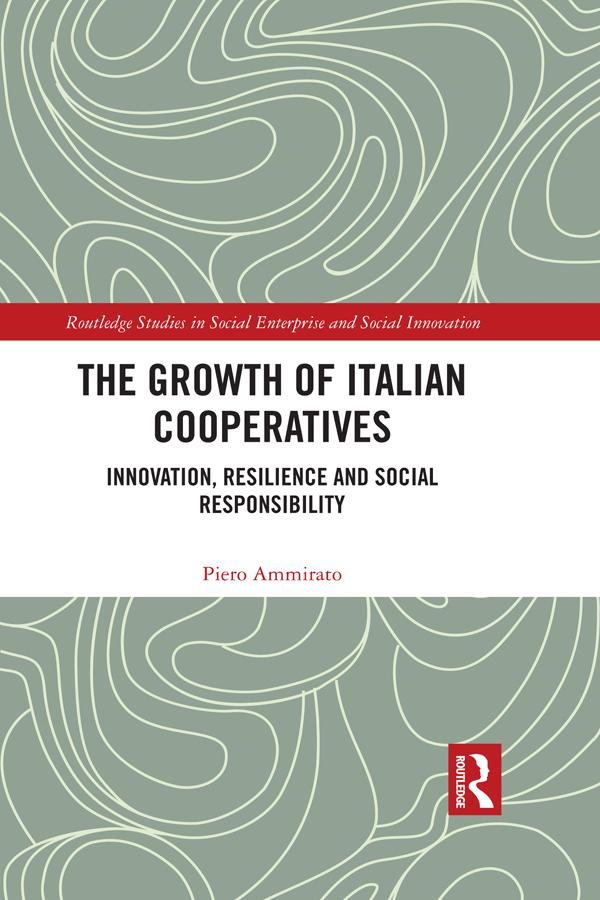
The Italian Cooperative Sector is amongst the largest in the world comprising over 60,000 cooperatives from all sectors of the economy directly employing 1.3 million people. Cooperatives created close to 30 percent of new jobs in Italy between 2001 and 2011 demonstrating that democratic cooperative enterprises can successfully operate in a market economy combining economic success and social responsibility. These offer a viable alternative to profit maximising enterprises and an opportunity to create a more pluralist and democratic market economy.
The Growth of Italian Cooperatives: Innovation, Resilience and Social Responsibility comprehensively explains how the Italian cooperative sector has managed to compete successfully in the global economy and to grow during the global financial crisis. This book will comprehensively explain how the Italian cooperative movement has managed to grow into a large successful network of cooperatives. It will examine the legislative framework and their unique business model that allows it to compete in the market as part of a network that includes central cooperative associations, financial and economic consortia, and financial companies. It will explore cooperative entrepreneurship through a discussion of the formation of cooperative groups, start-ups, worker-buyouts and the promotion of entirely new sectors such as the social services sector. Finally, The Growth of Italian Cooperatives examines how cooperatives have managed the GFC and how their behavior differs from private enterprises. It will also analyze the extent to which cooperatives compete while still uphold the key cooperative principles and fulfil their social responsibility.
This book is an interdisciplinary study of cooperative development and is designed to inform members of the academic community, government, public policy makers and cooperative managers that are primarily interested in economic democracy, economics of the cooperative enterprise, cooperative networks and economic development, cooperative legislation, democratic governance, job creation programs, politics of inclusion and how wealth can be more equitably distributed.
Pay easily by card, Klarna, Apple Pay or Google Pay. Not happy? You always have a 14-day money-back guarantee. Read more in our terms. If you have any questions, email us at hello@memmo.org.
Memmo makes studying easier – wherever you are in the world. We bring your course books and smart study tools together in one place: summaries, quizzes, podcasts and flashcards. Plus Ted, your study buddy who answers anything you wonder. Over 50,000 students already study here – built to help you learn faster and stress less.