
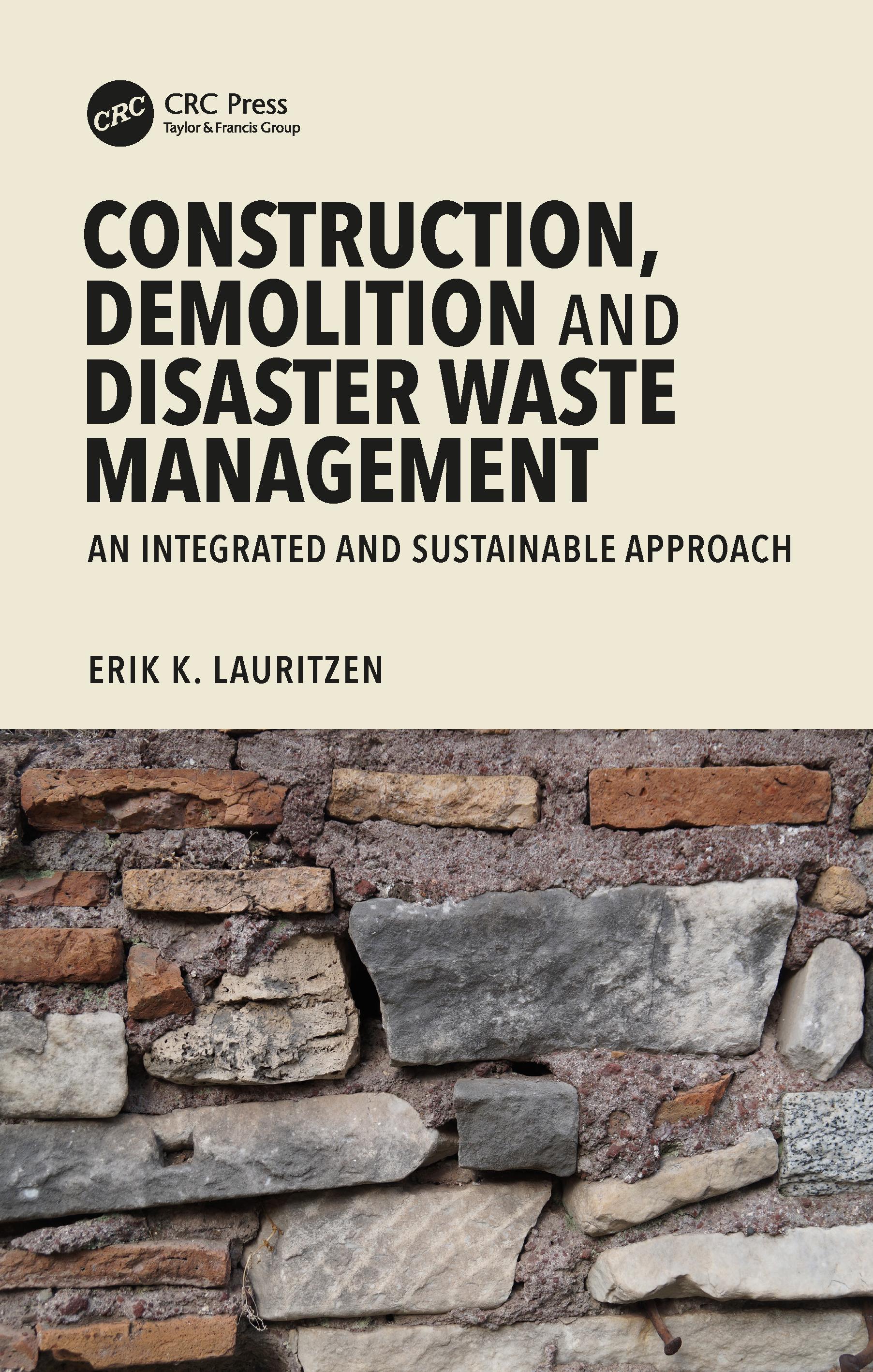
Construction and Demolition Waste (CDW), from the construction, maintenance, renovation and demolition of buildings and structures, represents a large proportion of the waste in industrialized societies.
Compared to other forms, such as household waste, more than 90% of CDW can be used as a resource and a substitute for construction materials, especially for primary, natural raw materials. Reuse, recovery and recycling depends on the quality and market for the materials, and the environmental impact of the processes for conversion of CDW from old structures to its use in new structures. However, the utilization today of CDW products as secondary resources is marginal. Most CDW is deposited or used as fill material, and the opportunities of high quality recycling are generally neglected.
This book presents the opportunities for the sustainable and resource efficient utilisation of CDW, focusing on recycling of concrete and masonry as the major forms of CDW. The recycling of gypsum, timber, mineral wool, asphalt and other types are also described. Its aim is to present a chain of value and material streams in the transformation of obsolete buildings and structures into new buildings and structures. It takes a holistic view, focusing on the lifecycle economy (the circular economy) and integrated management aspects of various scenarios ranging from high industrial urban renewal to debris removal and management after disasters and conflicts.
It is based on the author´s 35 years of research and development combined with practical international experience within the demolition and recycling area. It addresses students, architects, civil engineers, building owners, public authorities and others working in urban planning, demolition and resource management in the building and construction sector and in the reconstruction of damaged buildings after disasters and wars.
Pay easily by card, Klarna, Apple Pay or Google Pay. Not happy? You always have a 14-day money-back guarantee. Read more in our terms. If you have any questions, email us at hello@memmo.org.
Memmo makes studying easier – wherever you are in the world. We bring your course books and smart study tools together in one place: summaries, quizzes, podcasts and flashcards. Plus Ted, your study buddy who answers anything you wonder. Over 50,000 students already study here – built to help you learn faster and stress less.