
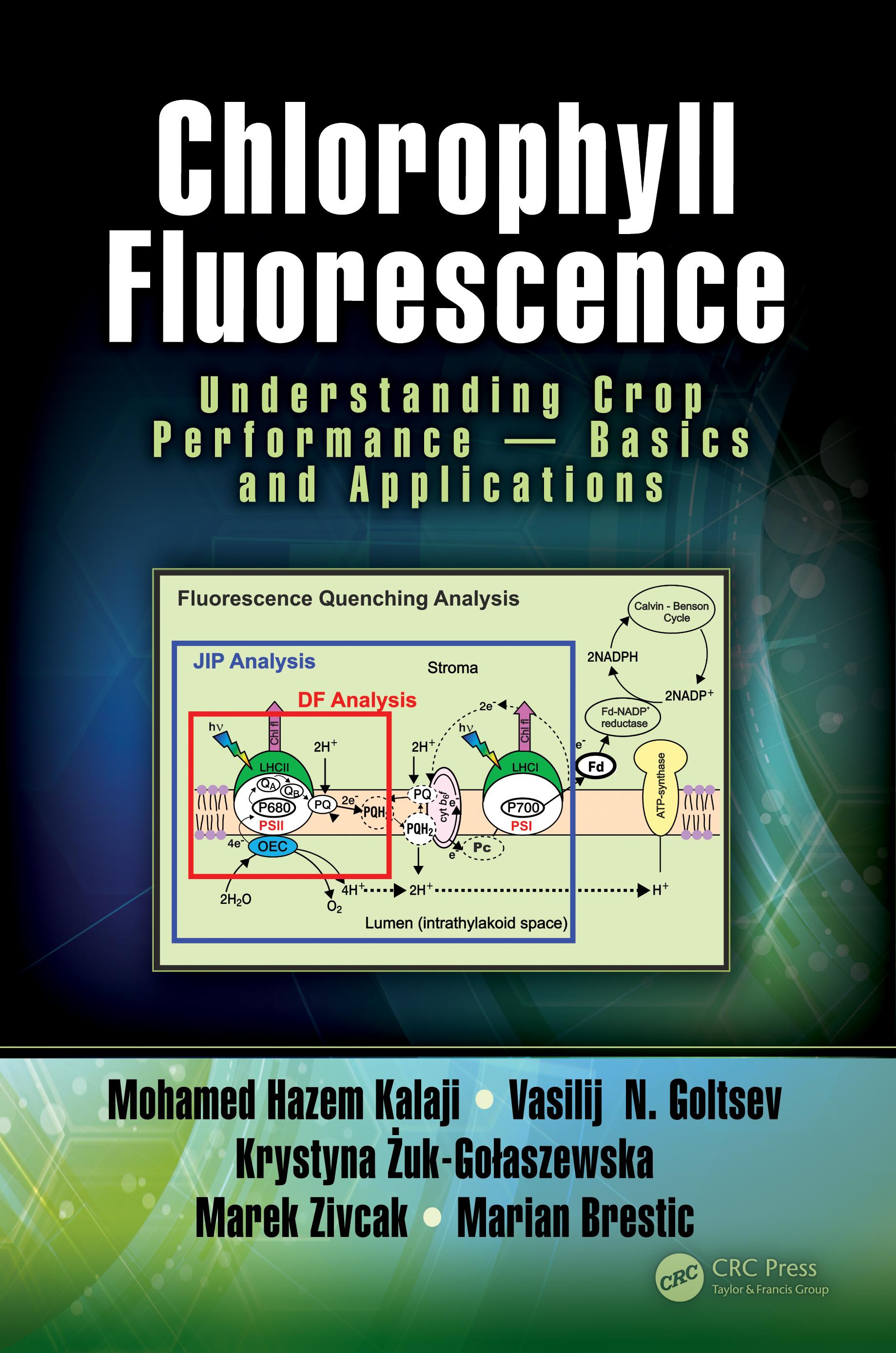
Chlorophyll a fluorescence is a tool for evaluating plant responses to stress conditions. Fluorescence can be used in plant phenotyping and breeding programs to monitor biotic and abiotic stresses including mineral deficiencies, soil salinity, and pathogenic diseases. Chlorophyll Fluorescence: Understanding Crop Performance — Basics and Applications reviews a diversity of instruments available for recording and analyzing different types of light signals from plants and addresses the use of chlorophyll a fluorescence in research on plants and other photosynthesizing organisms, such as algae and cyanobacteria.
This book characterizes the phenomenon of chlorophyll a fluorescence, describes the methods for its measurement, and demonstrates — using selected examples — the applicability of these methods to research the response of the photosynthetic apparatus and plant tolerance to unfavorable environmental conditions. In addition, chapters cover a general background on photosynthesis, analysis of delayed fluorescence, and the pulse amplitude modulated (PAM) technique. The book is addressed to a wide range of professionals in photosynthesis research and scientists from other areas of plant sciences.
Pay easily by card, Klarna, Apple Pay or Google Pay. Not happy? You always have a 14-day money-back guarantee. Read more in our terms. If you have any questions, email us at hello@memmo.org.
Memmo makes studying easier – wherever you are in the world. We bring your course books and smart study tools together in one place: summaries, quizzes, podcasts and flashcards. Plus Ted, your study buddy who answers anything you wonder. Over 50,000 students already study here – built to help you learn faster and stress less.