
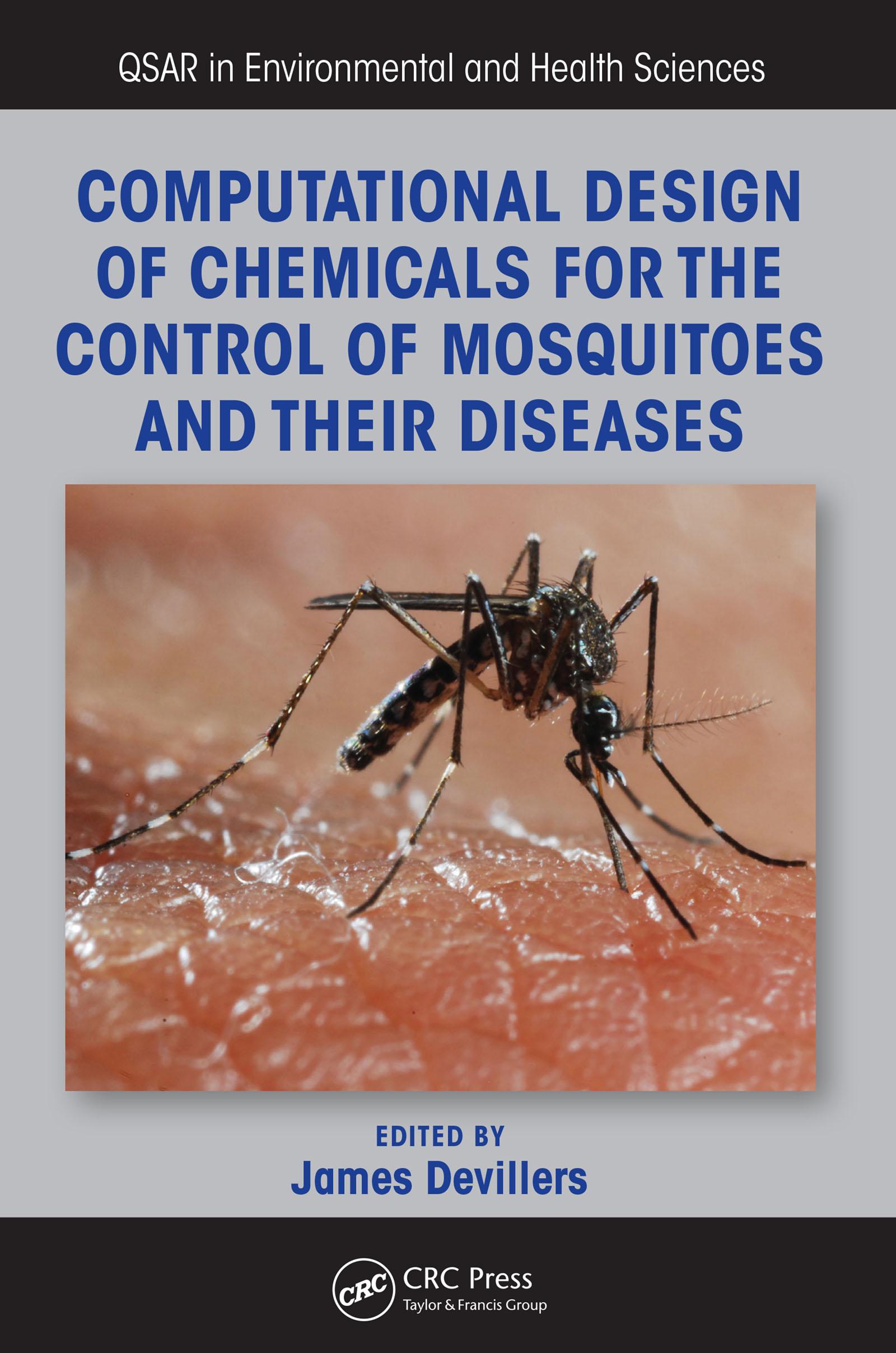
There is a compelling need for new drugs and efficient treatments against mosquito-borne diseases. Environmentally safe, but effective insecticides that address the problems of resistance are required. Computational Design of Chemicals for the Control of Mosquitoes and Their Diseases explains how the search for new substances effective against mosquitoes and their diseases has benefited from the use of in silico techniques. QSAR modeling is suited to identify the key structural features and/or physicochemical properties explaining an activity and to propose candidate molecules for further evaluation by laboratory tests. Homology modeling is useful to approximate the 3D structure of proteins of interest. Pharmacophore modeling is a powerful means to capture the chemical features responsible for an activity and to identify new potentially active compounds via the virtual screening of databases. Fugacity modeling and a wealth of other modeling paradigms are useful for risk assessment in vector borne disease control.
Pay easily by card, Klarna, Apple Pay or Google Pay. Not happy? You always have a 14-day money-back guarantee. Read more in our terms. If you have any questions, email us at hello@memmo.org.
Memmo makes studying easier – wherever you are in the world. We bring your course books and smart study tools together in one place: summaries, quizzes, podcasts and flashcards. Plus Ted, your study buddy who answers anything you wonder. Over 75,000 students already study here – built to help you learn faster and stress less.