
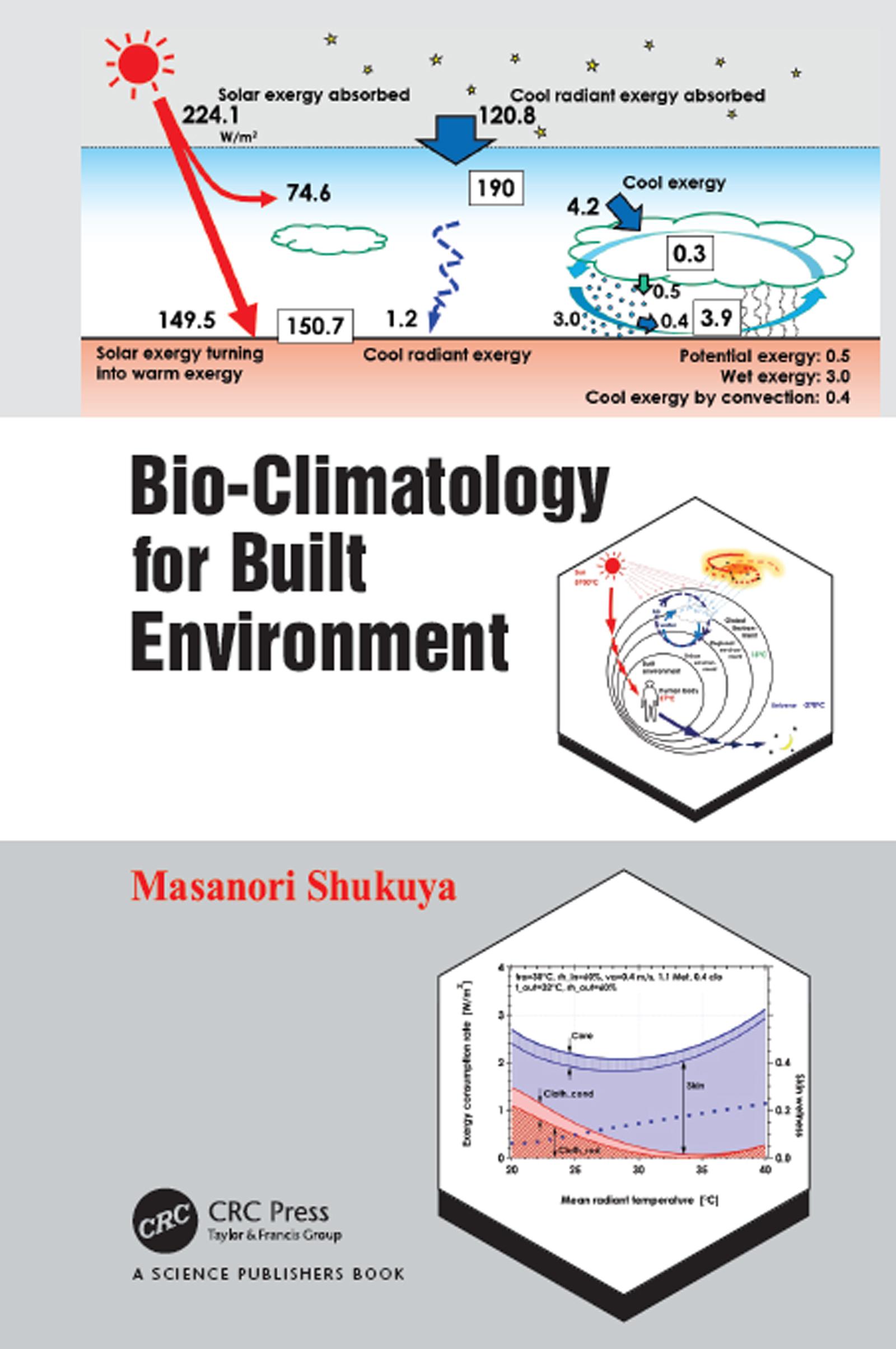
Indoor climate is determined by rational lighting, heating, cooling and ventilating systems. For occupants' well-being it should be consistent with how regional outdoor climate works in the flow of radiation via four paths of heat transfer: radiation; convection; conduction; and evaporation. This book starts with the relationship between the human body and its immediate environmental space followed by a brief introduction of passive and active systems for indoor climate conditioning. The nature of light and heat is discussed with a focus on building envelope systems such as walls and windows, and then examined from the viewpoint of thermodynamics and human-biology. Some examples are given to enable a better understanding of luminous and thermal characteristics of our most immediate environment particularly for those professionally involved in environmental planning, designing, and engineering to know about bio-climatic design principle.
Pay easily by card, Klarna, Apple Pay or Google Pay. Not happy? You always have a 14-day money-back guarantee. Read more in our terms. If you have any questions, email us at hello@memmo.org.
Memmo makes studying easier – wherever you are in the world. We bring your course books and smart study tools together in one place: summaries, quizzes, podcasts and flashcards. Plus Ted, your study buddy who answers anything you wonder. Over 75,000 students already study here – built to help you learn faster and stress less.