
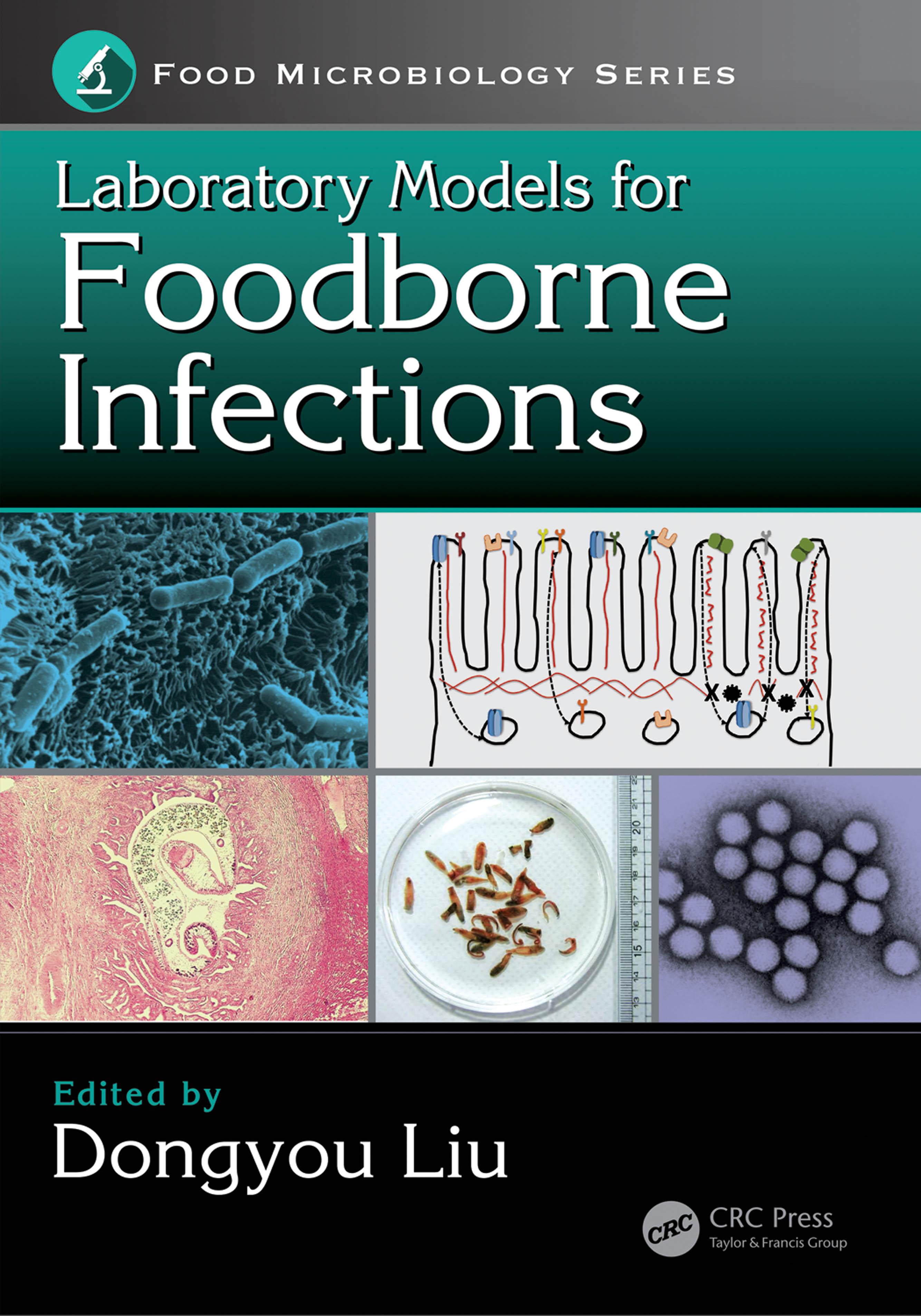
Resulting from ingestion of inappropriately prepared or stored foods containing pathogenic viruses, bacteria, fungi and parasites, foodborne infections have become a significant source of human morbidity and mortality worldwide in recent decades. This may be largely attributable to the remarkable popularity of convenient, ready-to-eat food products, the dramatic expansion of international food trades, and the continuing growth of immuno-suppressed population groups. Although anti-microbial treatments have played a crucial part in the control of foodborne infections in the past, the emergence and spread of anti-microbial resistance render the existing treatments ineffective. Additionally, our limited understanding of the molecular mechanisms of foodborne infections has thwarted our efforts in the development of efficacious vaccines for foodborne pathogens.
Given the obvious benefits of laboratory models in foodborne disease research, a great number of experiments have been conducted toward the elucidation of host-pathogen interactions in and pathogenic mechanisms of foodborne infections. Forming part of the Food Microbiology series, Laboratory Models for Foodborne Infections presents a state-of-the-art review of laboratory models that have proven valuable in deciphering the life cycle, epidemiology, immunobiology, and other key aspects of foodborne pathogens.
Written by scientists with respective expertise in foodborne pathogen research, each chapter includes a contemporary summary of a particular foodborne viral, bacterial, fungal, or parasitic infection in relation to its life cycle, epidemiology, clinical features, pathogenesis, host-pathogen interactions, and other related aspects. Besides providing a trustworthy source of information for undergraduates and postgraduates in food microbiology, Laboratory Models for Foodborne Infections offers an invaluable guide for scientists and food microbiologists with interest in exploiting laboratory models for detailed study of foodborne infections.
Pay easily by card, Klarna, Apple Pay or Google Pay. Not happy? You always have a 14-day money-back guarantee. Read more in our terms. If you have any questions, email us at hello@memmo.org.
Memmo makes studying easier – wherever you are in the world. We bring your course books and smart study tools together in one place: summaries, quizzes, podcasts and flashcards. Plus Ted, your study buddy who answers anything you wonder. Over 50,000 students already study here – built to help you learn faster and stress less.