
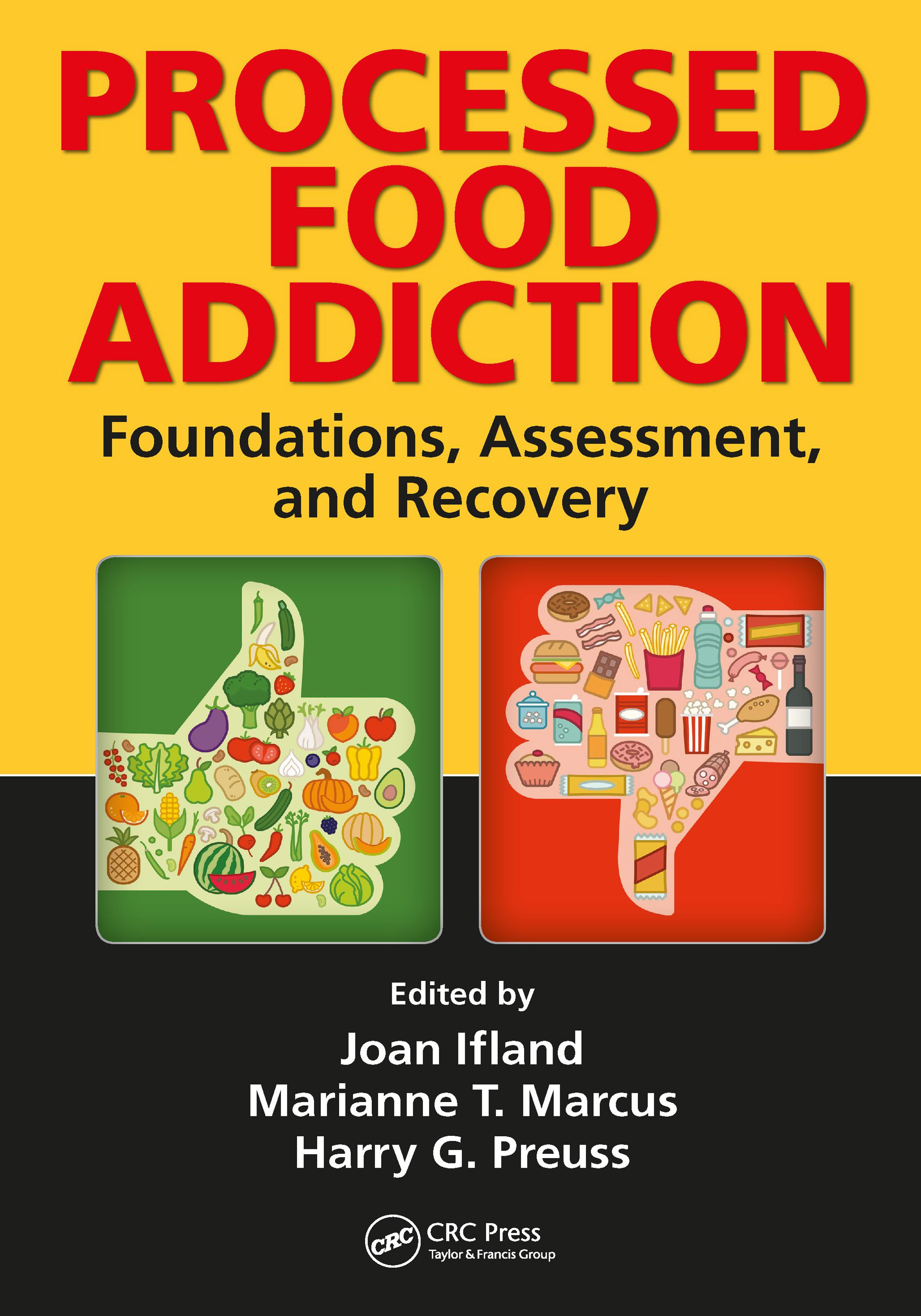
Obesity and eating disorders have stubbornly refused to respond to treatment since the 1990’s. This book organizes the evidence for a possible answer, i.e., that the problem could be one of addiction to processed foods. In a Processed Food Addiction (PFA) model, concepts of abstinence, cue-avoidance, acceptance of lapses, and consequences all play a role in long-term recovery. Application of these concepts could provide new tools to health professionals and significantly improve outcomes.
This book describes PFA recovery concepts in detail. The material bridges the research into practical steps that health professionals can employ in their practices. It contains an evidence-based chapter on concepts of abstinence from processed foods. It rigorously describes PFA pathology according to the DSM 5 Addiction Diagnostic Criteria. It applies the Addiction Severity Index to PFA so that health practitioners can orient themselves to diagnosing and assessing PFA. It contains ground-breaking insight into how to approach PFA in children.
Because the book is evidence-based, practitioners can gain the confidence to put the controversy about food addiction to rest. Practitioners can begin to identify and effectively help their clients who are addicted to processed foods. This is a breakthrough volume in a field that could benefit from new approaches.
Pay easily by card, Klarna, Apple Pay or Google Pay. Not happy? You always have a 14-day money-back guarantee. Read more in our terms. If you have any questions, email us at hello@memmo.org.
Memmo makes studying easier – wherever you are in the world. We bring your course books and smart study tools together in one place: summaries, quizzes, podcasts and flashcards. Plus Ted, your study buddy who answers anything you wonder. Over 50,000 students already study here – built to help you learn faster and stress less.