
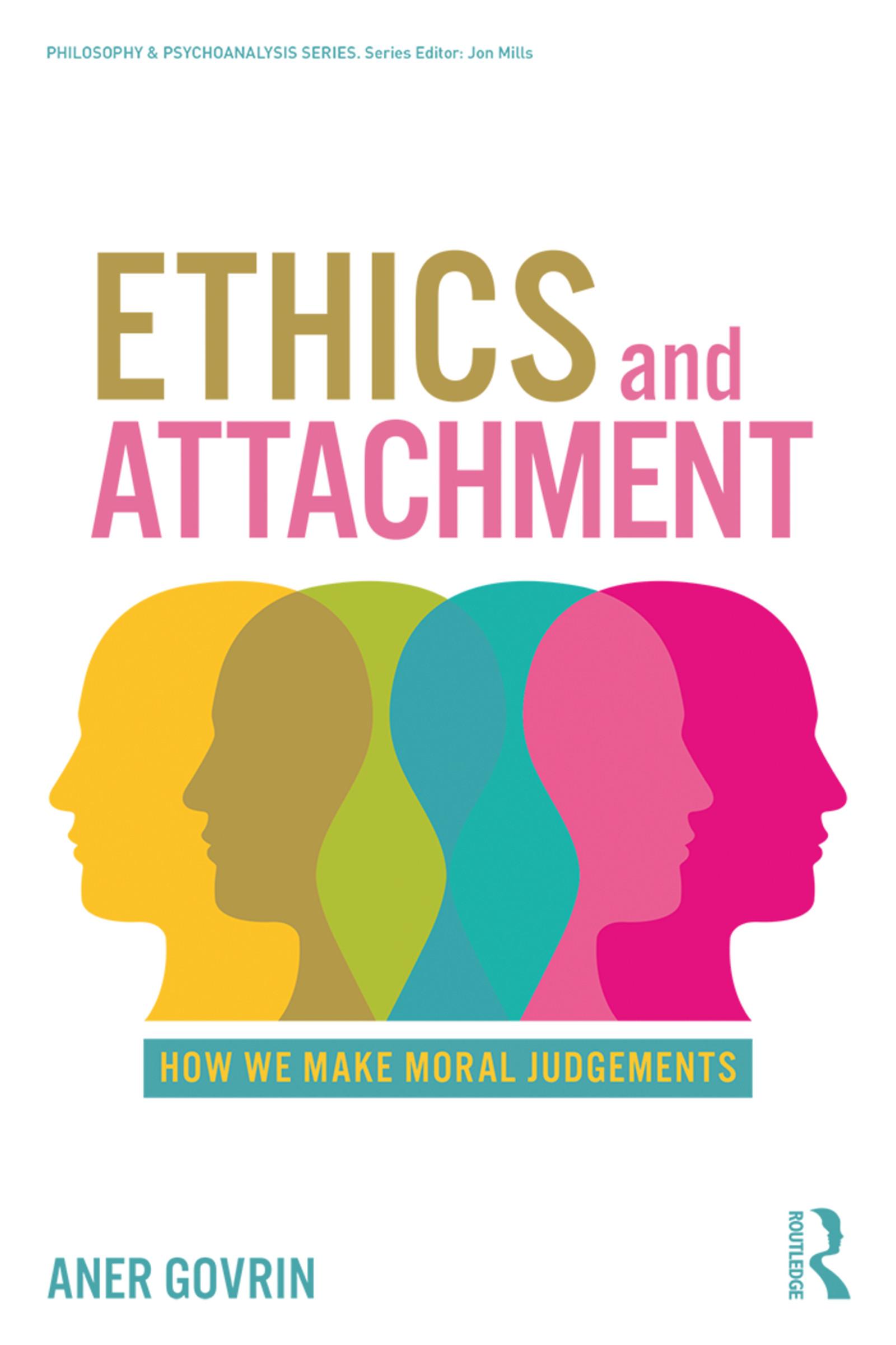
Why are we disgusted when an elderly woman is robbed but sympathize with the actions of a Robin Hood? Why do acts of cruelty against a helpless kitten bother us more than does the trampling of ants?
In Ethics and Attachment: How We Make Moral Judgments, psychoanalyst and philosopher Aner Govrin offers the attachment approach to moral judgment, an innovative new model of the process involved in making such moral judgments.
Drawing on clinical findings from psychoanalysis, neuroscience and developmental psychology, the author argues that infants' experience in the first year of life provides them with the basic tools needed to reach complex moral judgments later in life. With reference to Winnicott and Bowlby, the author examines how attachments affect our abilities to apply to make moral decisions.
With its wholly new ideas about moral judgments, Ethics and Attachment will be of great interest to ethics and moral philosophy scholars, law students, and psychoanalytic psychotherapists.
Pay easily by card, Klarna, Apple Pay or Google Pay. Not happy? You always have a 14-day money-back guarantee. Read more in our terms. If you have any questions, email us at hello@memmo.org.
Memmo makes studying easier – wherever you are in the world. We bring your course books and smart study tools together in one place: summaries, quizzes, podcasts and flashcards. Plus Ted, your study buddy who answers anything you wonder. Over 50,000 students already study here – built to help you learn faster and stress less.