
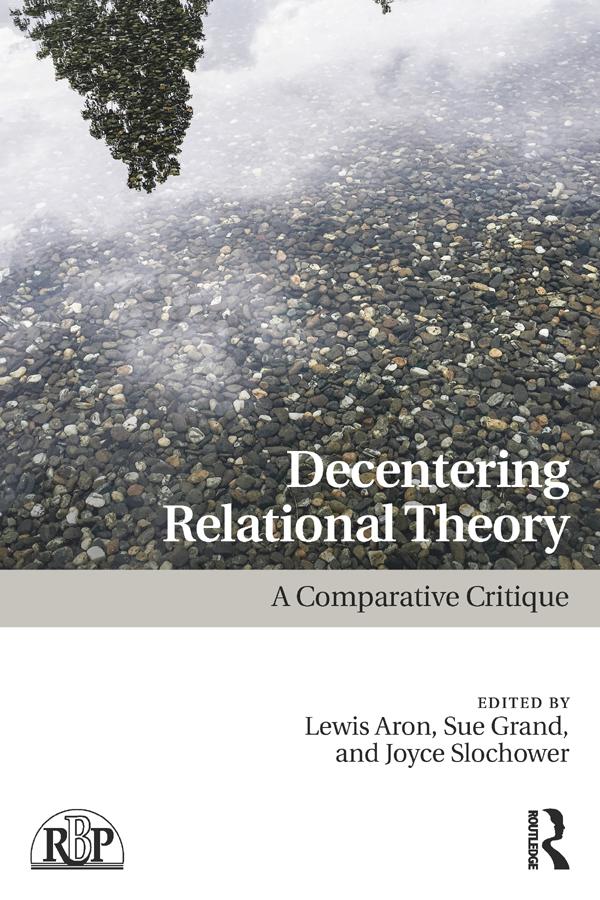
Decentering Relational Theory: A Comparative Critique invites relational theorists to contemplate the influence, overlaps, and relationship between relational theory and other perspectives. Self-critique was the focus of De-Idealizing Relational Theory. Decentering Relational Theory pushes critique in a different direction by explicitly engaging the questions of theoretical and clinical overlap – and lack thereof – with writers from other psychoanalytic orientations. In part, this comparison involves critique, but in part, it does not. It addresses issues of influence, both bidirectional and unidimensional. Our authors took up this challenge in different ways.
Like our authors in De-Idealizing, writers who contributed to Decentering were asked to move beyond their own perspective without stereotyping alternate perspectives. Instead, they seek to expand our understanding of the convergences and divergences between different relational perspectives and those of other theories.
Whether to locate relational thought in a broader theoretical envelope, make links to other theories, address critiques leveled at us, or push relational thinking forward, our contributors thought outside the box. The kinds of comparisons they were asked to make were challenging. We are grateful to them for having taken up this challenge. Decentering Relational Theory: A Comparative Critique will appeal to psychoanalysts and psychoanalytic psychotherapists across the theoretical spectrum.
Pay easily by card, Klarna, Apple Pay or Google Pay. Not happy? You always have a 14-day money-back guarantee. Read more in our terms. If you have any questions, email us at hello@memmo.org.
Memmo makes studying easier – wherever you are in the world. We bring your course books and smart study tools together in one place: summaries, quizzes, podcasts and flashcards. Plus Ted, your study buddy who answers anything you wonder. Over 50,000 students already study here – built to help you learn faster and stress less.