
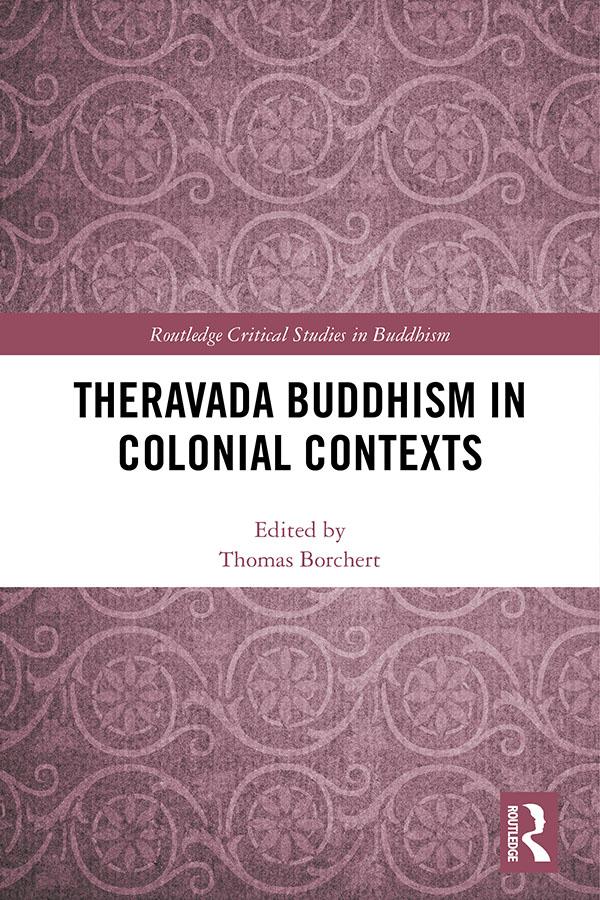
Over the course of the nineteenth century, most of the Theravada world of Southeast Asia came under the colonial domination of European powers. While this has long been seen as a central event in the development of modern forms of Theravada Buddhism, most discussions have focused on specific Buddhist communities or nations, and particularly their resistance to colonialism.
The chapters in this book examine the many different colonial contexts and regimes that Theravada Buddhists experienced, not just those of European powers such as the British, French, but also the internal colonialism of China and Thailand. They show that while many Buddhists resisted colonialism, other Buddhists shared agendas with colonial powers, such as for the reform of the monastic community. They also show that in some places, such as Singapore and Malaysia, colonialism enabled the creation of Theravada Buddhist communities. The book demonstrates the importance of thinking about colonialism both locally and regionally.
Providing a new understanding of the breadth of experiences of Theravada and colonialism across Asia., this book will be of interest to scholars in the field of Buddhist Studies, Asian History, Comparative World History, Southeast Asian Studies and Religious Studies.
Pay easily by card, Klarna, Apple Pay or Google Pay. Not happy? You always have a 14-day money-back guarantee. Read more in our terms. If you have any questions, email us at hello@memmo.org.
Memmo makes studying easier – wherever you are in the world. We bring your course books and smart study tools together in one place: summaries, quizzes, podcasts and flashcards. Plus Ted, your study buddy who answers anything you wonder. Over 50,000 students already study here – built to help you learn faster and stress less.