
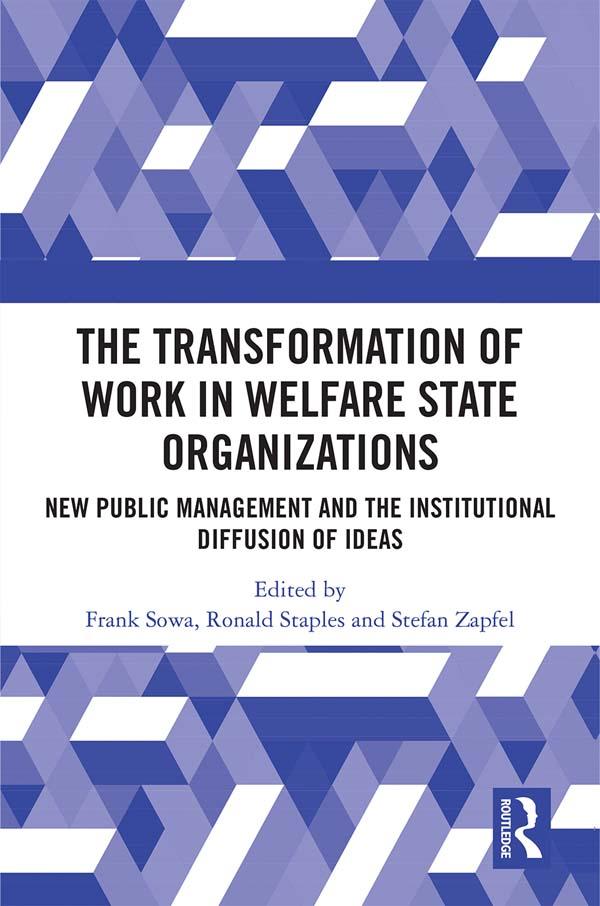
How has New Public Management influenced social policy reform in different developed welfare states? New managerialism is conceptualized as a paradigm, which not only shapes the decision-making process in bureaucratic organizations but also affects the practice of individuals (citizens).
Public administrations have been expected to transform from traditional bureaucratic organizations into modern managerial service providers by adopting a business model that requires the efficient and effective use of resources. The introduction of managerial practices, controlling and accounting systems, management by objectives, computerization, service orientation, increased outsourcing, competitive structures and decentralized responsibility are typical of efforts to increase efficiency. These developments have been accompanied by the abolition of civil service systems and fewer secure jobs in public administrations.
This book provides a sociological understanding of how public administrations deal with this transformation, how people’s role as public servants is affected, and what kind of strategies emerge either to meet these new organizational requirements or to circumvent them. It shows how hybrid arrangements of public services are created between the public and the private sphere that lead to conflicts of interest between private strategies and public tasks as well as to increasingly homogeneous social welfare provision across Europe.
Pay easily by card, Klarna, Apple Pay or Google Pay. Not happy? You always have a 14-day money-back guarantee. Read more in our terms. If you have any questions, email us at hello@memmo.org.
Memmo makes studying easier – wherever you are in the world. We bring your course books and smart study tools together in one place: summaries, quizzes, podcasts and flashcards. Plus Ted, your study buddy who answers anything you wonder. Over 50,000 students already study here – built to help you learn faster and stress less.