
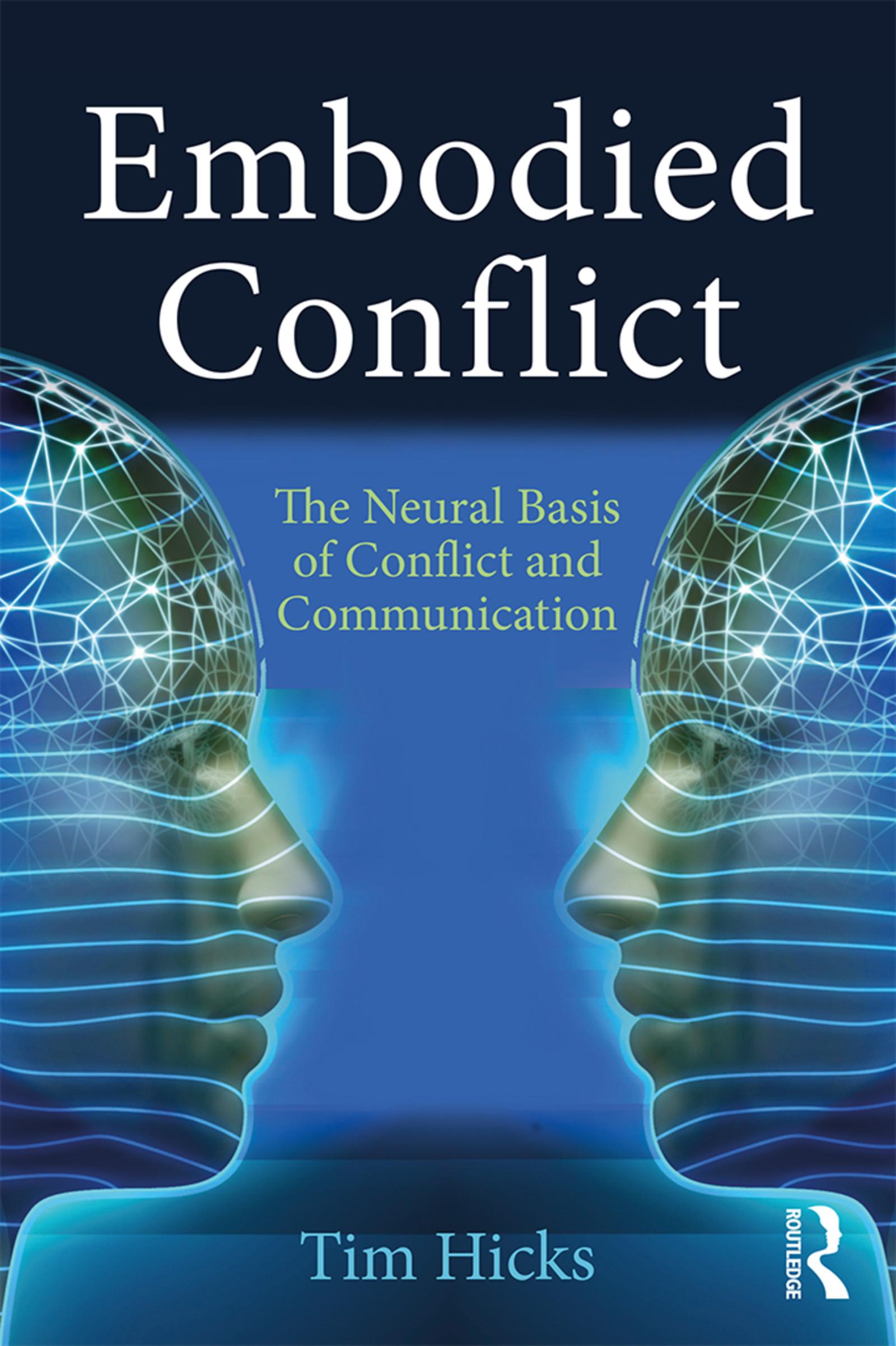
Our abilities to learn and remember are at the core of consciousness, cognition, and identity, and are based on the fundamental brain capacity to encode and store perceptual experience in abiding neural structures. These neural structures are the mechanisms by which we know, think about, create beliefs about, and understand the world in which we live. This includes the social world in which we experience conflict with others; our conflicts are largely about differences in what we know, think, believe, and understand. A number of characteristics of the neural encoding function are at the root of and help to explain conflict in our social relations and why some conflicts are difficult to prevent and resolve.
Embodied Conflict presents the neural encoding function in layman’s terms, outlining seven key characteristics and exploring their implications for communication, relationship, and conflict resolution. In doing so, Embodied Conflict situates the field of conflict resolution within the long arc of human history and asks whether and how conflict resolution practice can take another step forward by considering the neural experience of parties in conflict. The book includes many case examples and offers some suggestions for how conflict resolution practitioner training might be expanded to include this theoretical framework and its implications for practice.
Pay easily by card, Klarna, Apple Pay or Google Pay. Not happy? You always have a 14-day money-back guarantee. Read more in our terms. If you have any questions, email us at hello@memmo.org.
Memmo makes studying easier – wherever you are in the world. We bring your course books and smart study tools together in one place: summaries, quizzes, podcasts and flashcards. Plus Ted, your study buddy who answers anything you wonder. Over 50,000 students already study here – built to help you learn faster and stress less.