
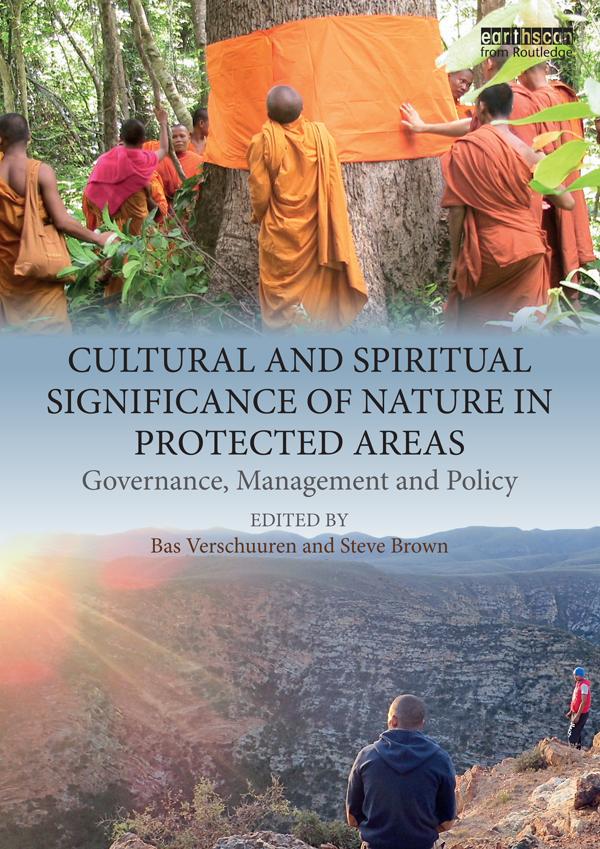
Cultural and spiritual bonds with ‘nature’ are among the strongest motivators for nature conservation; yet they are seldom taken into account in the governance and management of protected and conserved areas. The starting point of this book is that to be sustainable, effective, and equitable, approaches to the management and governance of these areas need to engage with people’s deeply held cultural, spiritual, personal, and community values, alongside inspiring action to conserve biological, geological, and cultural diversity.
Since protected area management and governance have traditionally been based on scientific research, a combination of science and spirituality can engage and empower a variety of stakeholders from different cultural and religious backgrounds. As evidenced in this volume, stakeholders range from indigenous peoples and local communities to those following mainstream religions and those representing the wider public. The authors argue that the scope of protected area management and governance needs to be extended to acknowledge the rights, responsibilities, obligations, and aspirations of stakeholder groups and to recognise the cultural and spiritual significance that ‘nature’ holds for people.
The book also has direct practical applications. These follow the IUCN Best Practice Guidelines for protected and conserved area managers and present a wide range of case studies from around the world, including Africa, Asia, Australia, Europe, and the Americas.
Pay easily by card, Klarna, Apple Pay or Google Pay. Not happy? You always have a 14-day money-back guarantee. Read more in our terms. If you have any questions, email us at hello@memmo.org.
Memmo makes studying easier – wherever you are in the world. We bring your course books and smart study tools together in one place: summaries, quizzes, podcasts and flashcards. Plus Ted, your study buddy who answers anything you wonder. Over 50,000 students already study here – built to help you learn faster and stress less.