
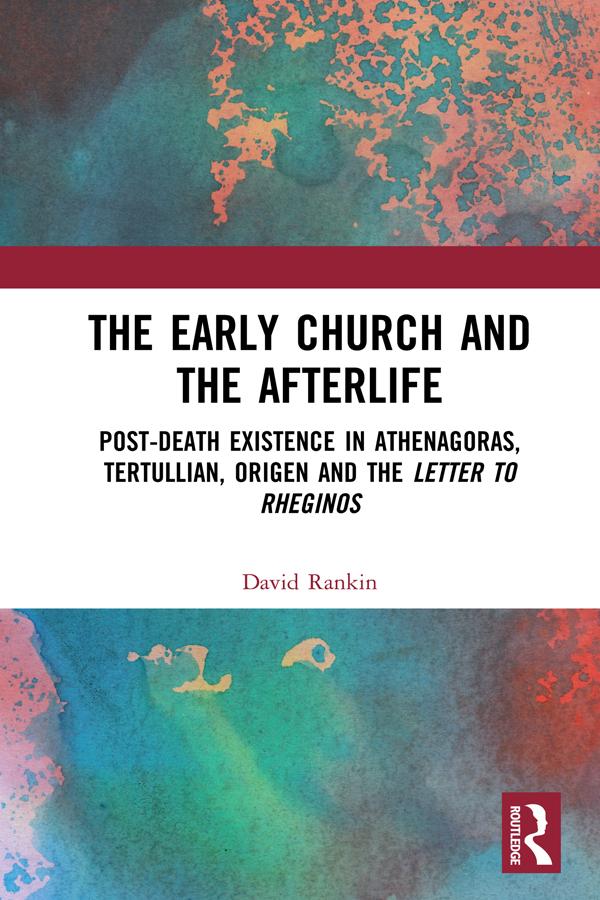
The resurrection of the dead was, as Tertullian says, ‘the chief article of the whole Christian faith’ (De resurrectione 39.3) and one of those beliefs which most distinguished Christian thought from much other contemporary thinking. This book looks at the way in which post-death existence is represented in the work of the early Church Fathers - notably Athenagoras, Tertullian, and Origen - and the Letter to Rheginos, and how these representations compare with its treatment both in Scripture and in contemporary, modern theological reflection.
Examining these attitudes to life after death, and putting them into conversation with more modern interpretations, the book asks four main questions. Firstly, whether resurrection happens immediately after death. Secondly, if there is continuity or discontinuity of space and time between death and a resurrection life. Thirdly, it explores whether post-death existence was thought to be embodied or not, and if so how might it be embodied. Finally, it addresses the issue of continuity, or discontinuity, of personal identity after death.
This book sheds light on the formation of a key doctrine of Christian faith. As such, it will be of significant interest to scholars and academics working in the History of Religion, Theology and Patristics.
Pay easily by card, Klarna, Apple Pay or Google Pay. Not happy? You always have a 14-day money-back guarantee. Read more in our terms. If you have any questions, email us at hello@memmo.org.
Memmo makes studying easier – wherever you are in the world. We bring your course books and smart study tools together in one place: summaries, quizzes, podcasts and flashcards. Plus Ted, your study buddy who answers anything you wonder. Over 50,000 students already study here – built to help you learn faster and stress less.