
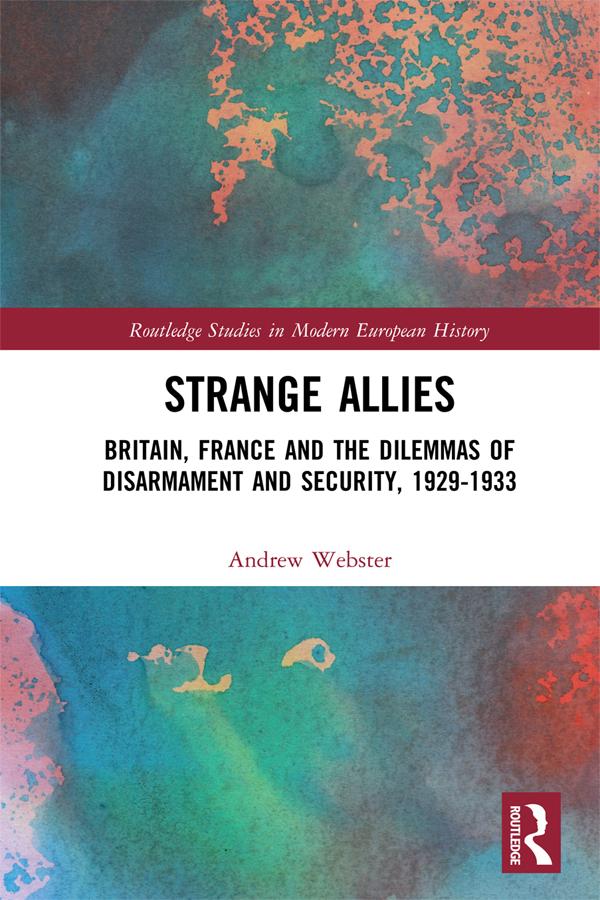
Strange Allies examines three intersecting themes of fundamental importance to the international history of the period between the two world wars. First, and most broadly, it is a study of the international history of the pivotal ‘hinge years’, running from the onset of the Depression in late 1929 to the Nazi capture of power in Germany in early 1933. The second theme is the strategic relationship between Britain and France, the critical dynamic in the management of global and European international relations during this time of great fluidity and uncertainty. The most contentious and intractable issue that divided the two countries was the pursuit of international disarmament, which forms the third theme of the book.
Strange Allies is based upon extensive research in British and French archives, as well as in the archives of the League of Nations in Geneva. The book’s focus on 1929–31 in particular makes a major contribution to the international history of the interwar period by re-examining the security and strategic policies of the second Labour government in Britain and of foreign minister Aristide Briand in the post-Locarno years in France. For 1931–33, the book looks at the impact of the great financial and economic crisis of 1931 on security and disarmament planning in Britain and France. It then considers the impact of the Anglo-French relationship on the instability of Europe and on the failure of the World Disarmament Conference.
This book is the first detailed study of the Anglo-French relationship during a critical period which saw a reshaping of the boundaries of global security. Although the Anglo-French alliance is rightly seen to be pivotal to both the initial phase of implementing the Versailles settlement of 1919 and the efforts to contain Hitler and protect Europe after 1936, Strange Allies demonstrates the degree to which these states’ conflicting views of security were central to international relations in the years leading up to Hitler’s accession to power.
Pay easily by card, Klarna, Apple Pay or Google Pay. Not happy? You always have a 14-day money-back guarantee. Read more in our terms. If you have any questions, email us at hello@memmo.org.
Memmo makes studying easier – wherever you are in the world. We bring your course books and smart study tools together in one place: summaries, quizzes, podcasts and flashcards. Plus Ted, your study buddy who answers anything you wonder. Over 50,000 students already study here – built to help you learn faster and stress less.