
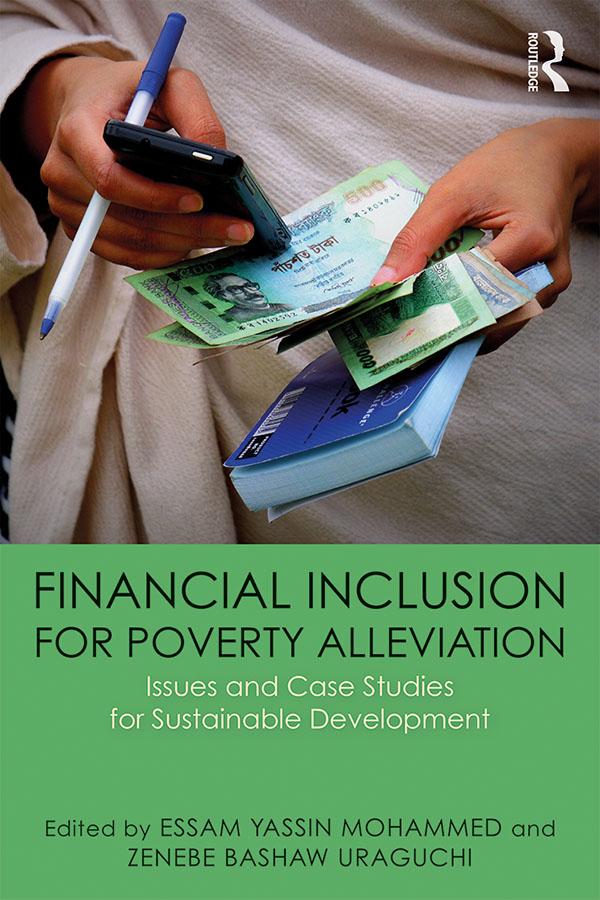
More than one billion people still live below the poverty line – most of them in South Asia and Sub-Saharan Africa. Financial inclusion is a major issue, as more than three-quarters of the numbers of poor and disadvantaged women and men do not have access to financial products and services, such as bank accounts, affordable and suitable loans, and insurance.
The key objective of this book is to provide practical case studies of financial inclusion, rather than focus on academic debates such as the ideological basis of promoting microfinance. Using the recently adopted Sustainable Development Goals as an overall framing of the issues, it shows how poor and disadvantaged women and men can be bankable if the right facilitation for maximizing opportunities and addressing constraints are in place. Case studies confirm that achieving inclusive and sustainable access to financial products and services goes beyond simply enabling poor and disadvantaged women and men to have access to credit, or the ability to open a bank account. Examples from Africa, Asia and Latin America demonstrate encouraging progress in making microcredit accessible to millions of poor people. The foremost challenge, however, has been to ensure that they have access to, and usage intensity of, suitable and affordable financial products and services that meet the needs of their livelihoods as well as risks and mitigation strategies. This requires understanding that poor and disadvantaged women and men do not exist in isolation from complex and interdependent functions in the financial system, which includes a number of actors, diversified services, constraints (not just symptoms) and capacities and incentives.
Overall, the book provides a rich source of examples of how building inclusive financial systems can empower the world's poor – by increasing income and employment opportunities, securing livelihoods and reducing poverty.
Pay easily by card, Klarna, Apple Pay or Google Pay. Not happy? You always have a 14-day money-back guarantee. Read more in our terms. If you have any questions, email us at hello@memmo.org.
Memmo makes studying easier – wherever you are in the world. We bring your course books and smart study tools together in one place: summaries, quizzes, podcasts and flashcards. Plus Ted, your study buddy who answers anything you wonder. Over 50,000 students already study here – built to help you learn faster and stress less.