
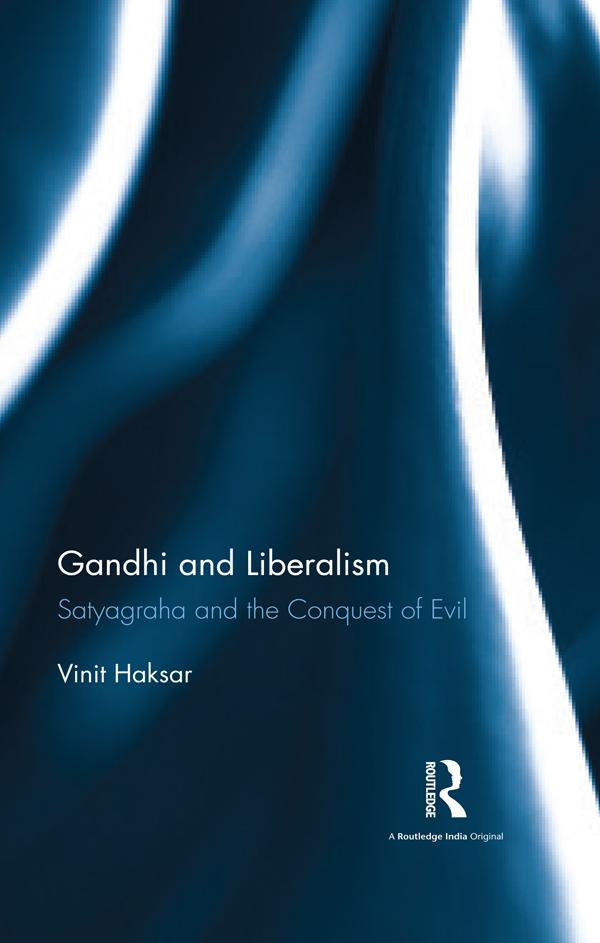
One of the main themes running through Gandhi’s life and work was the battle against evil. This book offers a fascinating reconstruction of Gandhi and the doctrine of Ahimsa or non-violence. Gandhi’s moral perfectionism is contrasted with other forms of perfectionism, but the book stresses that Gandhi also offered a doctrine of the second best. Following Gandhi, the author argues that outward violence with compassion is intrinsically not as good as non-violence with compassion, but it is a second best that is sometimes a necessary evil in an imperfect world. The book provides an illuminating analysis of coercion, non-co-operation, civil disobedience and necessary evil, comparing Gandhi’s ideas with that of some of the leading western moral, legal and political philosophers. Further, some of his important ideas are shown to have relevance for the working of the Indian Constitution.
This book will be essential for scholars and researchers in moral, legal and political philosophy, Gandhi studies, political science and South Asian studies.
Pay easily by card, Klarna, Apple Pay or Google Pay. Not happy? You always have a 14-day money-back guarantee. Read more in our terms. If you have any questions, email us at hello@memmo.org.
Memmo makes studying easier – wherever you are in the world. We bring your course books and smart study tools together in one place: summaries, quizzes, podcasts and flashcards. Plus Ted, your study buddy who answers anything you wonder. Over 50,000 students already study here – built to help you learn faster and stress less.