
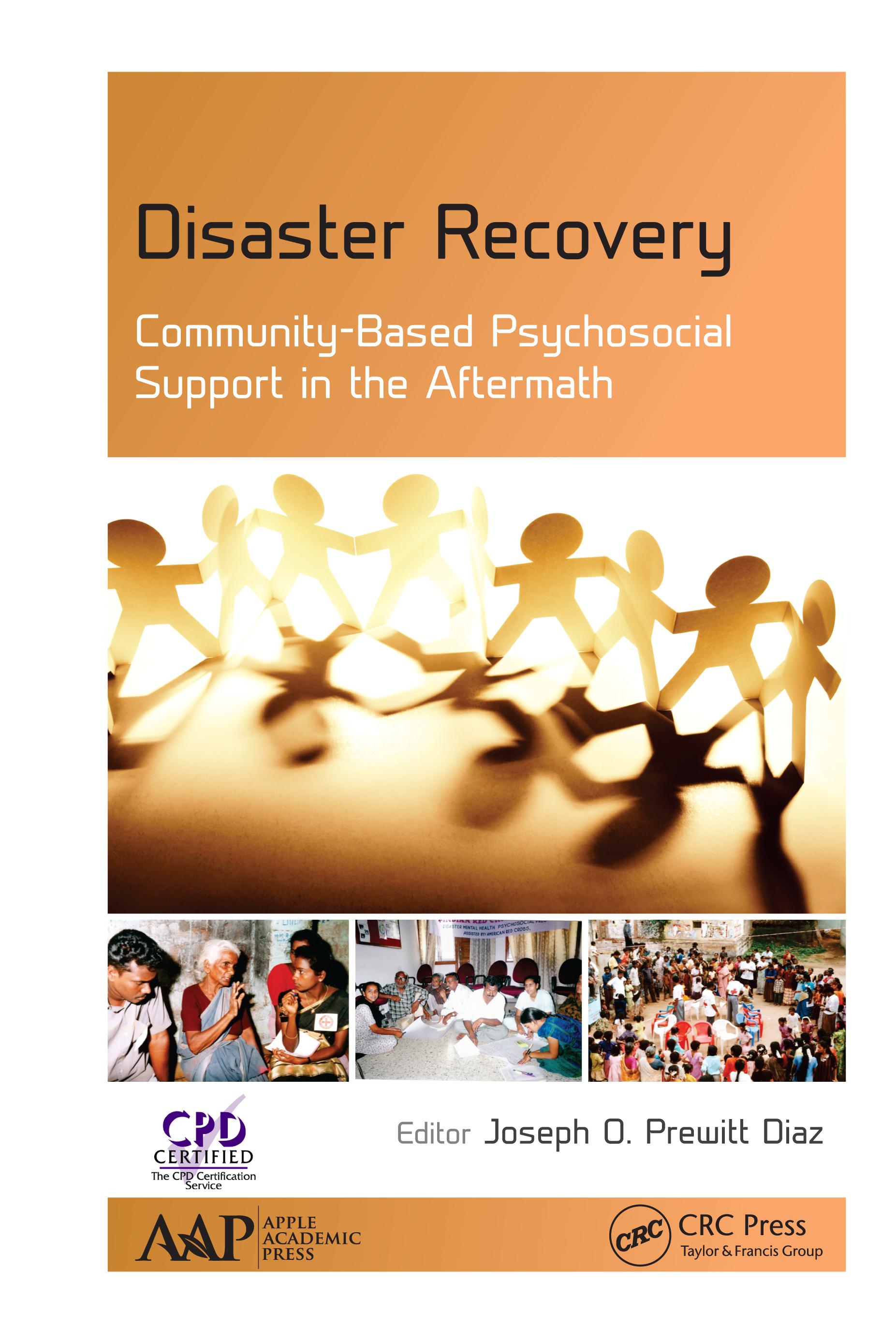
This new volume, Disaster Recovery: Community-Based Psychosocial Support in the Aftermath, provides a wealth of realistic and applicable information for addressing mental health related issues resulting from disasters. It will provide readers with both a theoretical and practical look at community-based psychosocial support and community consultation from an interdisciplinary perspective. The last thirty years have brought to the fore the importance of psychosocial support as an integrator and cross-cutting theme in disaster response. The need for a timely volume on this topic at this time is based on recent world efforts to include the topic within the disaster risk reduction framework.
In this volume, the authors share their practical knowledge about development of community-based psychosocial support based on the hundred of thousands of people in fourteen countries and three continents who provided an immense amount of knowledge about psychosocial support through their participation in programs. These programs helped to lead the way in sharing the strategies and tools presented in here.
This book uses case study methodology and practical examples to share how communities can come together, care for themselves, and use their social capital and problem-solving skills to survive and thrive. The information in the book will aid in the development of program offerings for mental health and psychosocial support in disasters and humanitarian emergencies. The final section will provide the components of a proposal for external work and a chapter on monitoring and evaluation. The book will include case studies to help illustrate the content.
Edited by Dr. Joseph O. Prewitt Diaz, a 2008 recipient of the American Psychological Association’s International Humanitarian Award, the book is based on his extensive experience and existing research in the field.
The information provided here will be helpful to those working in or teaching on disaster management and support, including professors and instructors, students in social work and psychology, government and non-government agencies personnel in the field in places where emerging conflicts are occurring, and many others.
Pay easily by card, Klarna, Apple Pay or Google Pay. Not happy? You always have a 14-day money-back guarantee. Read more in our terms. If you have any questions, email us at hello@memmo.org.
Memmo makes studying easier – wherever you are in the world. We bring your course books and smart study tools together in one place: summaries, quizzes, podcasts and flashcards. Plus Ted, your study buddy who answers anything you wonder. Over 50,000 students already study here – built to help you learn faster and stress less.