
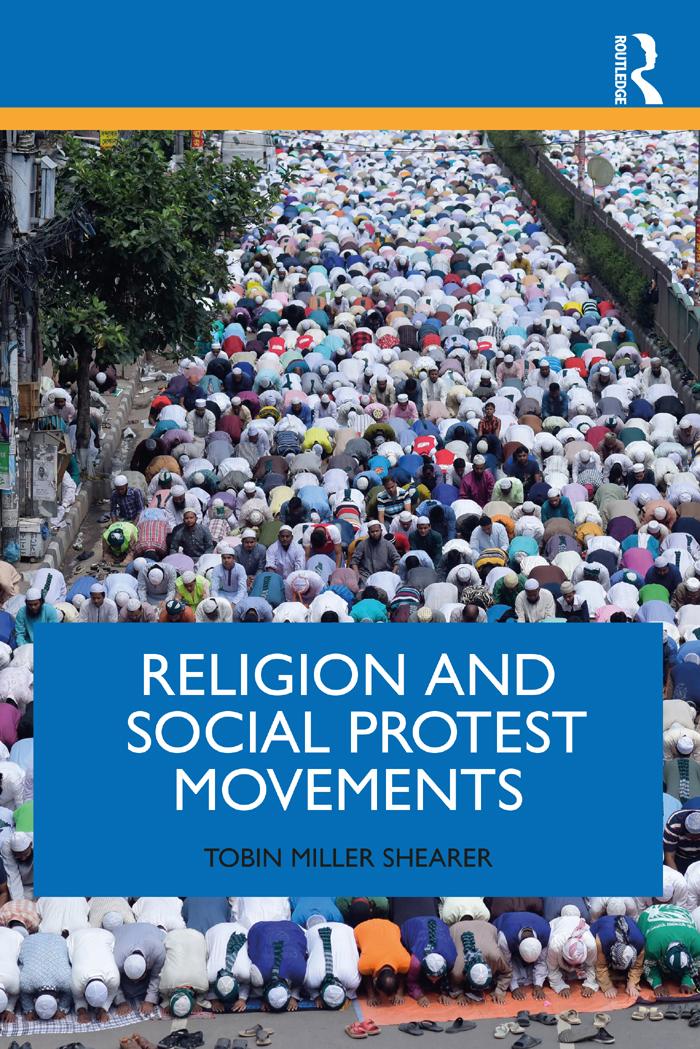
What role has religion played in social protest movements? This important book examines how activists have used religious resources such as liturgy, prayer, song and vestments with a focus on the following global case studies:
- The mid-twentieth century US civil rights movement.
- The late twentieth century antiabortion movement in the United States of America.
- The early twenty-first century water protectors’ movement at Standing Rock, North Dakota.
- Indian independence led by Mohandas Gandhi in the early 1930s.
- The Polish Solidarity movement of the 1980s.
- The South African anti-apartheid movement of the 1980s and 1990s.
Prayer as a sacred act is usually associated with piety and pacifism; however, it can be argued that those who pray in public while protesting are more likely to encounter violence. Drawing on journalistic accounts, participant reflections, and secondary literature, Religion and Social Protest Movements offers both historical and theoretical perspectives on the persistent correlation of the use of public prayer with an increase in conflict and violence.
This book is an important read for students and researchers in history and religious studies, and those in related fields such as sociology, African-American studies, and Native American studies.
Pay easily by card, Klarna, Apple Pay or Google Pay. Not happy? You always have a 14-day money-back guarantee. Read more in our terms. If you have any questions, email us at hello@memmo.org.
Memmo makes studying easier – wherever you are in the world. We bring your course books and smart study tools together in one place: summaries, quizzes, podcasts and flashcards. Plus Ted, your study buddy who answers anything you wonder. Over 50,000 students already study here – built to help you learn faster and stress less.