
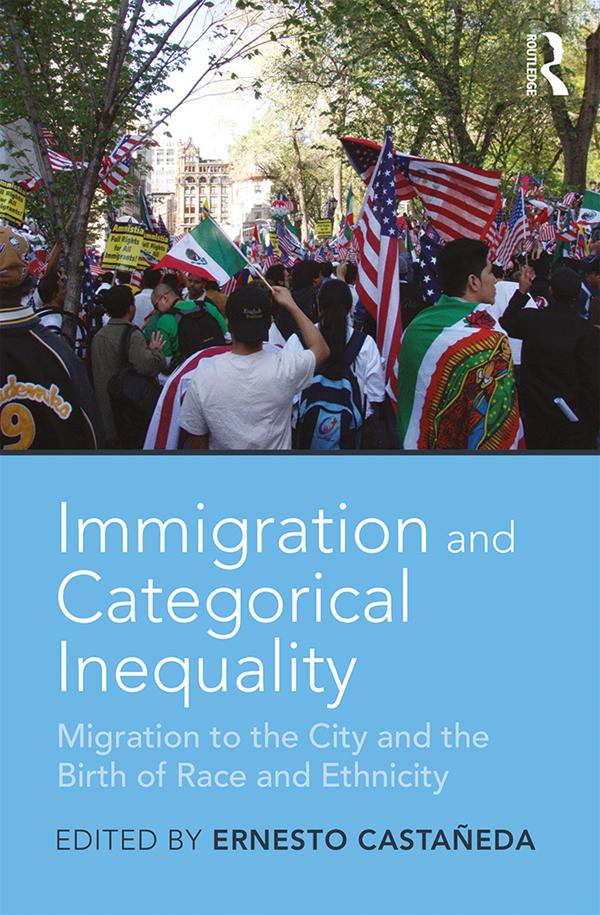
Immigration and Categorical Inequality explains the general processes of migration, the categorization of newcomers in urban areas as racial or ethnic others, and the mechanisms that perpetuate inequality among groups. Inspired by the pioneering work of Charles Tilly on chain migration, transnational communities, trust networks, and categorical inequality, renowned migration scholars apply Tilly’s theoretical concepts using empirical data gathered in different historical periods and geographical areas ranging from New York to Tokyo and from Barcelona to Nepal. The contributors of this volume demonstrate the ways in which social boundary mechanisms produce relational processes of durable categorical inequality. This understanding is an important step to stop treating differences between certain groups as natural and unchangeable. This volume will be valuable for scholars, students, and the public in general interested in understanding the periodic rise of nativism in the United States and elsewhere.
Pay easily by card, Klarna, Apple Pay or Google Pay. Not happy? You always have a 14-day money-back guarantee. Read more in our terms. If you have any questions, email us at hello@memmo.org.
Memmo makes studying easier – wherever you are in the world. We bring your course books and smart study tools together in one place: summaries, quizzes, podcasts and flashcards. Plus Ted, your study buddy who answers anything you wonder. Over 50,000 students already study here – built to help you learn faster and stress less.