
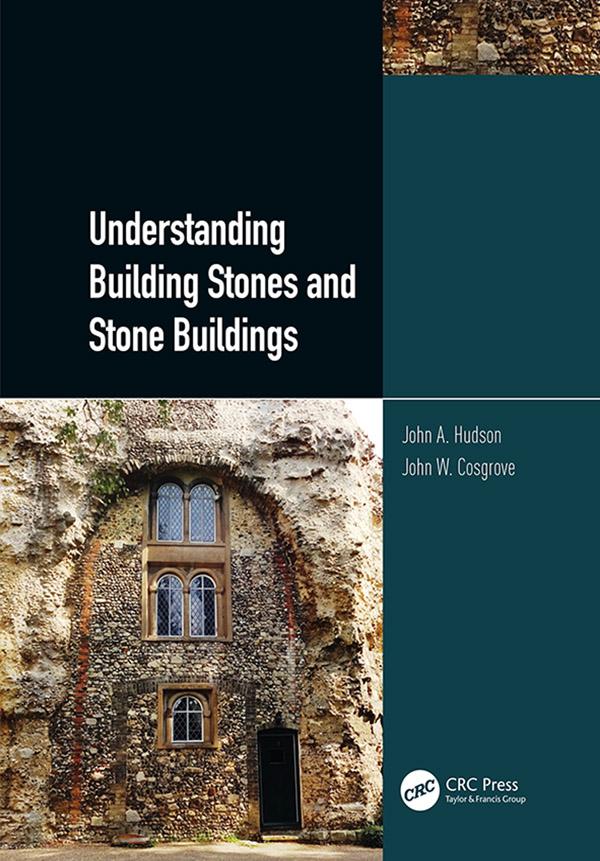
This book covers the wide spectrum of subjects relating to obtaining and using building stones, starting with their geological origin and then describing the nature of granites, volcanics, limestones, sandstones, flint, metamorphic stones, breccias and conglomerates, with emphasis being placed on how to recognise the different stones via the many illustrated examples from Great Britain and other countries. The life of a building stone is explained from its origin in the quarry, through its exposure to the elements when used for a building, to its eventual deterioration. The structure of stone buildings is then discussed, with explanations of the mechanics of pillars, lighthouses and walls, arches, bridges, buttresses and roof vaults, plus castles and cathedrals.
The sequence of the historical architectural styles of stone buildings is explained—from the early days through to postmodern buildings. Special attention is paid to two famous architects: the Roman Vitruvius and the English Sir Christopher Wren who designed and supervised the construction of St. Paul’s Cathedral in London. To demonstrate many of the concepts presented, two exemplary stone buildings are described in detail: the Albert Memorial in London and Durham Cathedral in northern England. The former building is interesting because it is comprised of a cornucopia of different building stones and the latter building because of its architecture and sandstone decay mechanisms. In the final Chapter, ruined stone buildings are discussed—the many reasons for their decay and the possibility of their ‘rebirth’ via digital recording of their geometry.
The book has over 350 pages and is illustrated with more than 450 diagrams and colour photographs of both the various stones and the associated stone buildings. Readers’ knowledge of the subject will be greatly enhanced by these images and the related explanatory text. A wide-ranging references and bibliography section is also included.
Pay easily by card, Klarna, Apple Pay or Google Pay. Not happy? You always have a 14-day money-back guarantee. Read more in our terms. If you have any questions, email us at hello@memmo.org.
Memmo makes studying easier – wherever you are in the world. We bring your course books and smart study tools together in one place: summaries, quizzes, podcasts and flashcards. Plus Ted, your study buddy who answers anything you wonder. Over 75,000 students already study here – built to help you learn faster and stress less.