
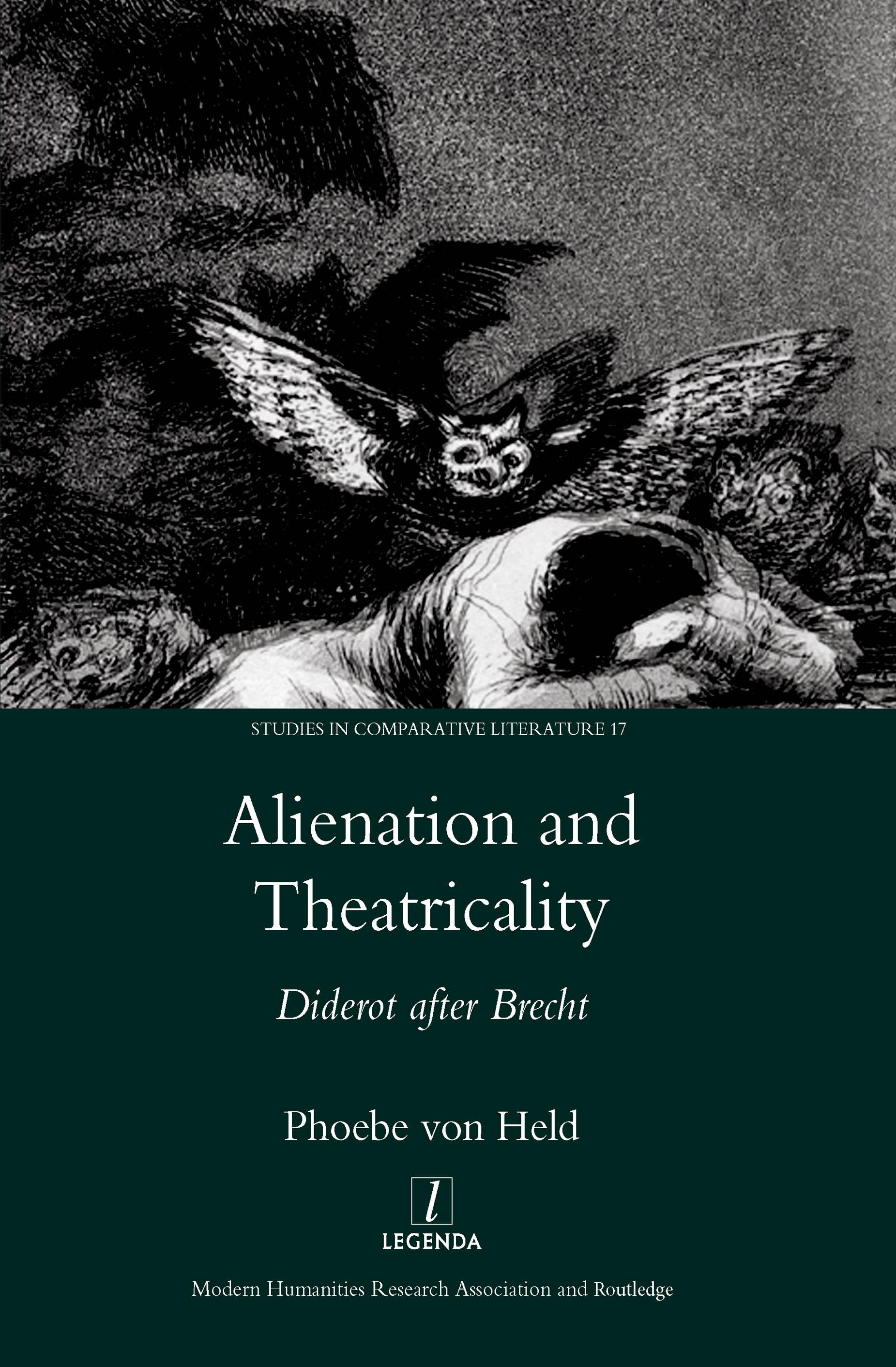
Alienation (Vefremdung) is a concept inextricably linked with the name of twentieth-century German playwright Bertolt Brecht - with modernism, the avant-garde and Marxist theory. However, as Phoebe von Held argues in this book, 'alienation' as a sociological and aesthetic notionavant la lettre had already surfaced in the thought of eighteenth-century French philosopher and writer Denis Diderot. This original study destabilizes the conventional understanding of alienation through a reading ofLe Paradoxe sur le comedien, Le Neveu de Rameau and other works by Diderot, opening up new ways of interpretation and aesthetic practices. If alienation constitutes a historical development for the Marxist Brecht, for Diderot it defines an existential condition. Brecht uses the alienation-effect to undermine a form of naturalism based on subjectivity, identification and illusion; Diderot, by contrast, plunges the spectator into identification and illusion, to produce an aesthetic of theatricality that is profoundly alienating and yet remains anchored in subjectivity.
Pay easily by card, Klarna, Apple Pay or Google Pay. Not happy? You always have a 14-day money-back guarantee. Read more in our terms. If you have any questions, email us at hello@memmo.org.
Memmo makes studying easier – wherever you are in the world. We bring your course books and smart study tools together in one place: summaries, quizzes, podcasts and flashcards. Plus Ted, your study buddy who answers anything you wonder. Over 75,000 students already study here – built to help you learn faster and stress less.
You might also like
Buy the book0