
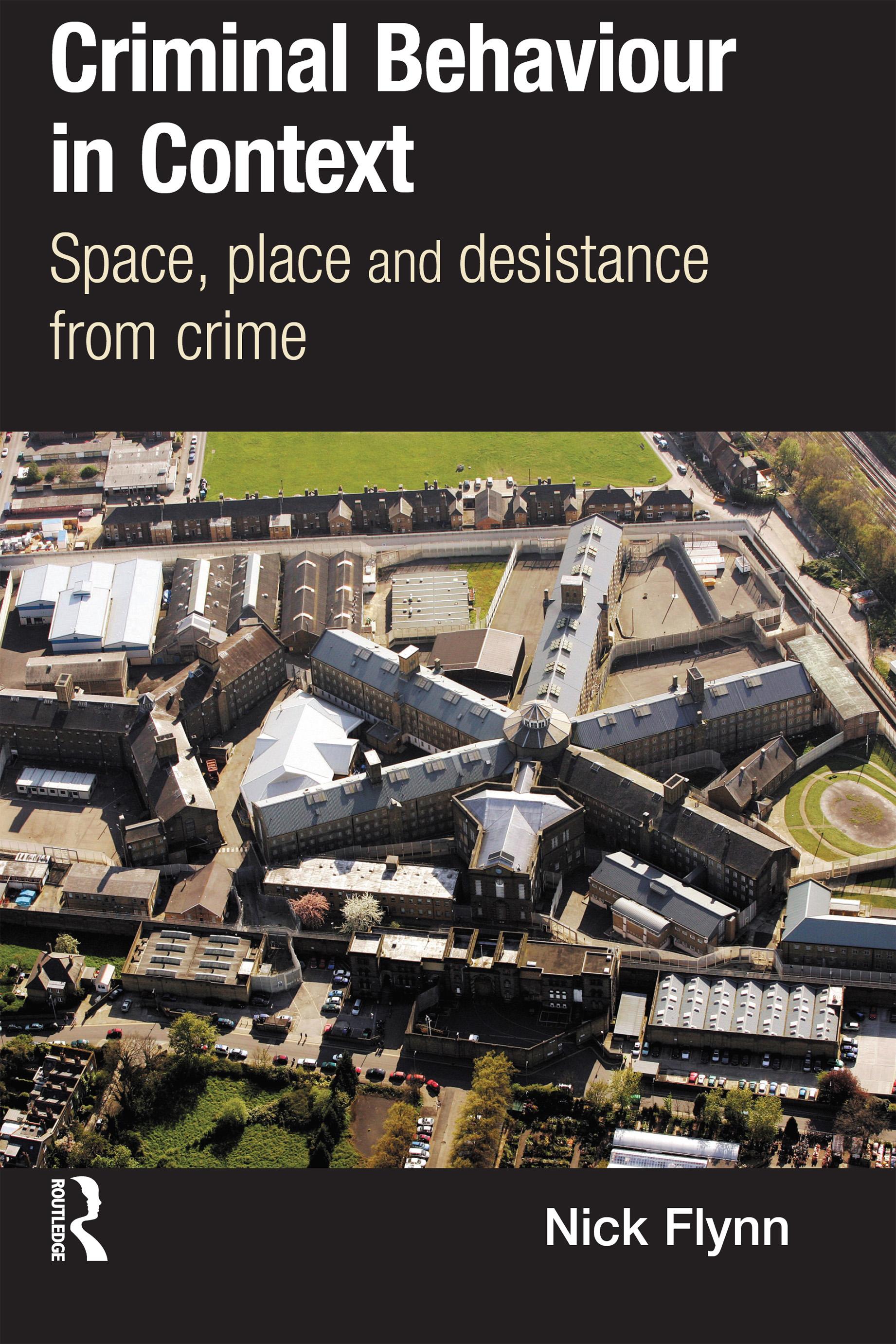
This book examines the extent to which criminal desistance – 'the change process involved in the ending of criminal behaviour' – is affected by personal and social circumstances which are place specific. Grounded in criminological spatial analysis, as well as more general social scientific investigations of the role of space and place in contemporary social, economic and cultural life, it examines why large numbers of prisoners in the United States and the United Kingdom appear to be drawn from – and after release return to – certain urban neighbourhoods.
In doing so Criminal Behaviour in Context assesses the effect of this unique life course experience on the pathways and choices open to ex-prisoners who attempt to give up crime. Including new data on the geographical distribution of offenders, interviews with serving prisoners, and drawing on theories about social context, identity and subjectivity, it discusses the implications of the evidence and arguments presented for prisoner reintegration policy and practice.
Pay easily by card, Klarna, Apple Pay or Google Pay. Not happy? You always have a 14-day money-back guarantee. Read more in our terms. If you have any questions, email us at hello@memmo.org.
Memmo makes studying easier – wherever you are in the world. We bring your course books and smart study tools together in one place: summaries, quizzes, podcasts and flashcards. Plus Ted, your study buddy who answers anything you wonder. Over 50,000 students already study here – built to help you learn faster and stress less.