
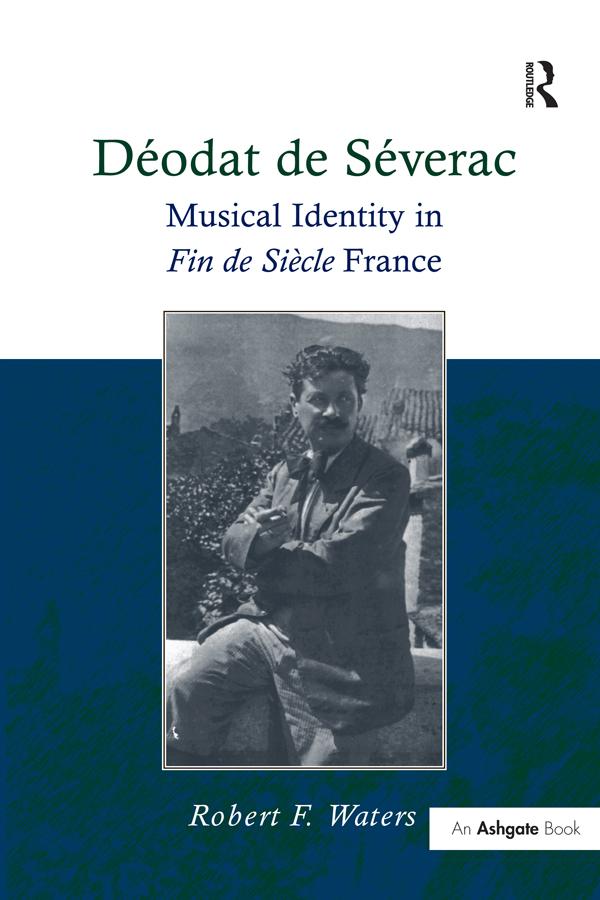
D�at de S�rac (1872-1921) is best known for his piano music but his compositions included orchestral and vocal works, including opera, cantata and incidental music. Claude Debussy described S�rac's music as "exquisite and rich with ideas." The early works were influenced by Impressionist harmonies, church modes, cyclic techniques, folk-like melodies and Andalusian motives. S�rac's style changed dramatically in 1907 when he left Paris and began to include Catalan elements in his compositions - a transition that has hitherto gone unrecognized. Robert Waters provides a much-needed study of the life and works of S�rac, focusing on the composer's regionalist philosophy. S�rac's engagement with folk music was not a patriotic gesture in the vein of nationalistic composers, but a way of expressing regional identity within France to counter the restrictive styles sanctioned by the Paris Conservatory. His musical philosophy mirrored larger social and political debates regarding anti-centralist positions on education, politics, art and culture in fin de siecle France. Such debates involved political and social leaders whom S�rac knew and personally admired, including the writer Maurice Barr�and the poet Fr�ric Mistral. The book will appeal to those specializing in French music, European ethnic musics, piano music and French music history.
Pay easily by card, Klarna, Apple Pay or Google Pay. Not happy? You always have a 14-day money-back guarantee. Read more in our terms. If you have any questions, email us at hello@memmo.org.
Memmo makes studying easier – wherever you are in the world. We bring your course books and smart study tools together in one place: summaries, quizzes, podcasts and flashcards. Plus Ted, your study buddy who answers anything you wonder. Over 50,000 students already study here – built to help you learn faster and stress less.
You might also like
Buy the book0