
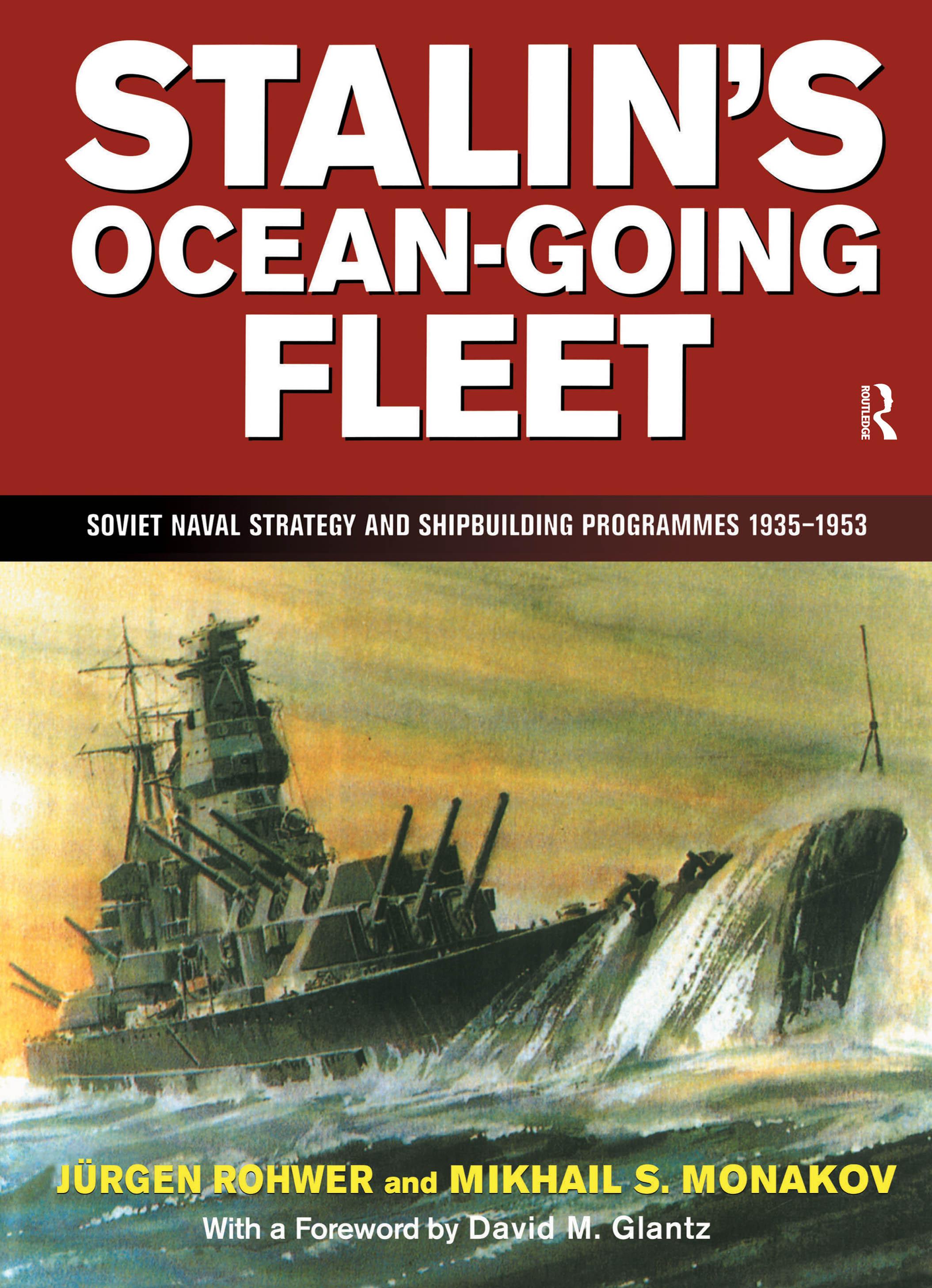
In this work, two senior naval historians analyze the discussions held in leading Soviet political, military, and naval circles concerning naval strategy and the decisions taken for warship-building programmes. They describe the reconstitution of the fleet under difficult conditions from the end of the Civil War up to the mid-1920s, leading to a change from classical naval strategy to a Jeune ecole model in the first two Five-Year Plans, including efforts to obtain foreign assistance in the design of warships and submarines. Their aim is to explain the reasons for the sudden change in 1935 to begin building a big ocean-going fleet. After a period of co-operation with Germany from 1939-41, the plans came to a halt when Hitler attacked the Soviet Union in 1941. Finally, this work covers the reopening of the naval planning processes in 1944 and 1945 and the discussions of the naval leadership with Stalin, the party and government officials about the direction of the new building programmes as the Cold War began.
Pay easily by card, Klarna, Apple Pay or Google Pay. Not happy? You always have a 14-day money-back guarantee. Read more in our terms. If you have any questions, email us at hello@memmo.org.
Memmo makes studying easier – wherever you are in the world. We bring your course books and smart study tools together in one place: summaries, quizzes, podcasts and flashcards. Plus Ted, your study buddy who answers anything you wonder. Over 50,000 students already study here – built to help you learn faster and stress less.
You might also like
Buy the book0