
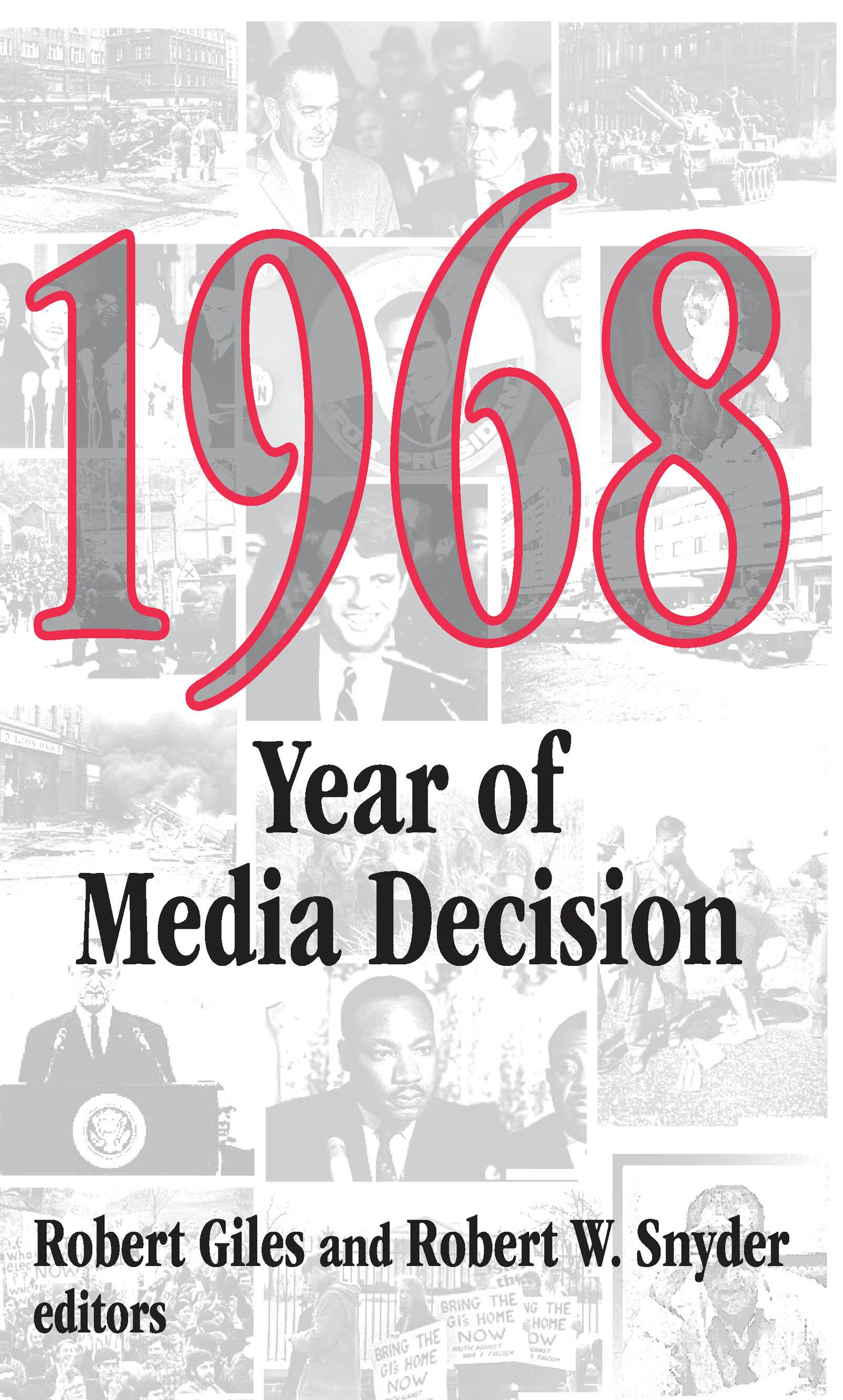
Thirty years ago American political life was all relentless, painful, and confounding: the Tet Offensive brought new intensity to the Vietnam War; President Lyndon Johnson would not seek re-election; Martin Luther King, Jr. and Robert Kennedy were assassinated; student protests rocked France; a Soviet invasion ended "socialism with a human face" in Czechoslovakia; the Mexican government massacred scores of peaceful demonstrators; and Richard M. Nixon was elected president. Any one of the events of 1968 bears claim to historical significance. Together they set off shock waves that divided Americans into new and contending categories: hawks and doves, old and young, feminists and chauvinists, straights and hippies, blacks and whites, militants and moderates. As citizens alive to their own time and as reporters responsible for making sense of it, journalists did not stand aside from the conflicts of 1968. In their lives and in their work, they grappled with momentous issues--war, politics, race, and protest.
Pay easily by card, Klarna, Apple Pay or Google Pay. Not happy? You always have a 14-day money-back guarantee. Read more in our terms. If you have any questions, email us at hello@memmo.org.
Memmo makes studying easier – wherever you are in the world. We bring your course books and smart study tools together in one place: summaries, quizzes, podcasts and flashcards. Plus Ted, your study buddy who answers anything you wonder. Over 50,000 students already study here – built to help you learn faster and stress less.
You might also like
Buy the book0