
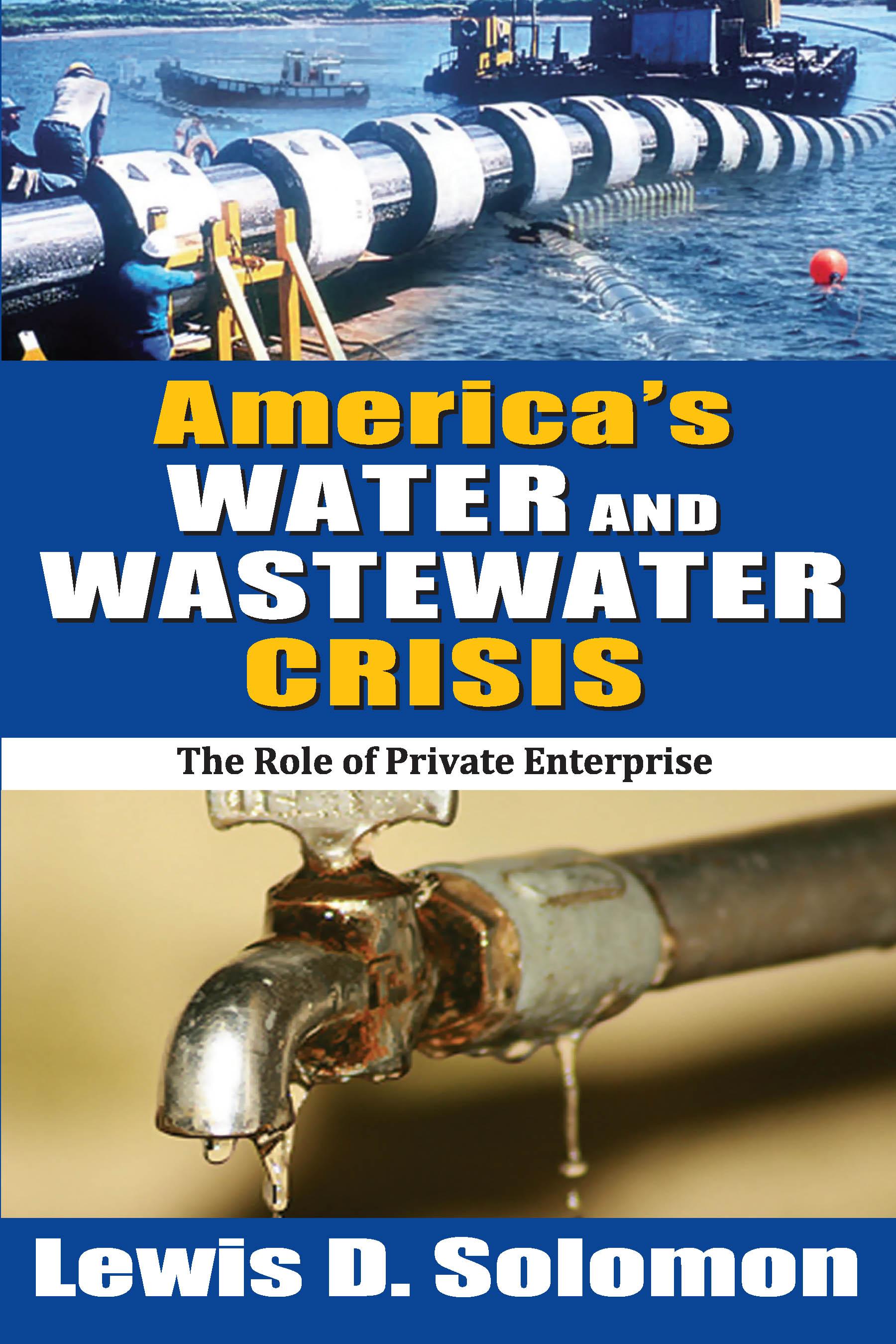
This book examines the role of private firms in the American water and wastewater industry. As more water infrastructure shifts from public- to private-sector control, vendors, consultants, and facilities are taking on more importance. Lewis D. Solomon presents an historical overview of water supply and treatment needs and the role of the government, including how water policy has been crafted. He argues that water scarcity is becoming a problem due to groundwater depletion, contamination, and patterns of consumption. He examines the impact of climate change on water availability and quality considering voluntary conservation programs and mandatory restrictions for water use.
Solomon points to how for-profit firms can use technology to increase water supply. He describes what privatization would look like in practice and reviews evidence from two case studies. Solomon proposes privatization as a viable response to America's water crisis that can address both scarcity and capital problems.
America's Water and Wastewater Crisis presents a careful examination of how the water industry has operated in the United States in the past and how it may work as we move into the future. This book is invaluable to environmental specialists, businessmen, and government officials.
Pay easily by card, Klarna, Apple Pay or Google Pay. Not happy? You always have a 14-day money-back guarantee. Read more in our terms. If you have any questions, email us at hello@memmo.org.
Memmo makes studying easier – wherever you are in the world. We bring your course books and smart study tools together in one place: summaries, quizzes, podcasts and flashcards. Plus Ted, your study buddy who answers anything you wonder. Over 50,000 students already study here – built to help you learn faster and stress less.