
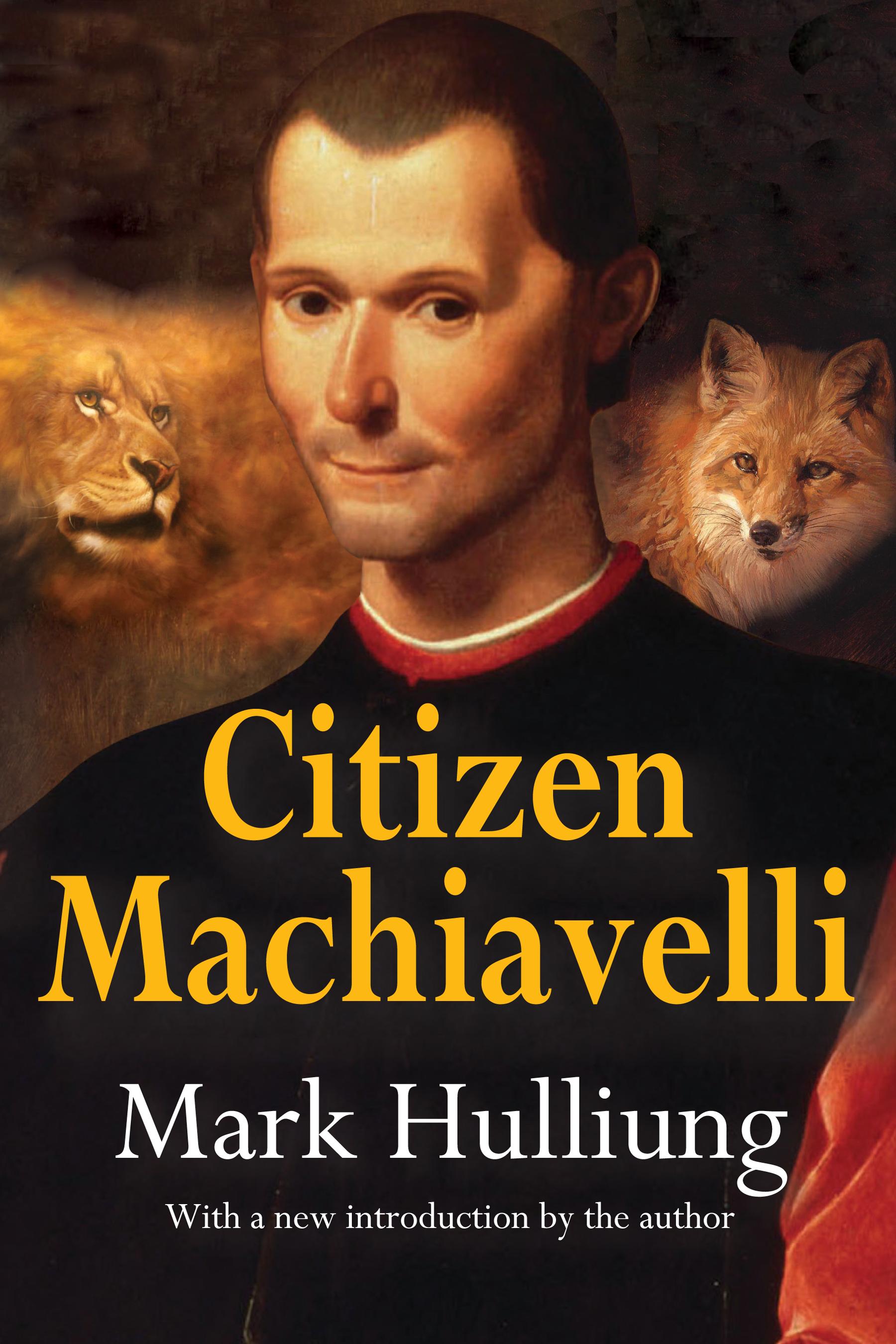
Machiavelli has been viewed as the forerunner of the humanists of our day, liberals and socialists, who have discovered that moral ends sometimes require immoral means. Against this interpretation, Mark Hulliung argues that Machiavelli's "humanism," was rooted in classical notions of grandeur and greatness, and that his prime reason for admiring the ancient Roman republic was that it conquered the world. In short, Machiavelli was at his most Machiavellian precisely when he voiced his "civic humanism."Hulliung argues that Machiavelli's embrace of fraud and violence cannot be justified by patriotism or a professed concern with the common good. He indicts Machiavelli's use and abuse of history in the service of his cynical agenda the quest for power. Hulliung sees Machiavelli as a republican imperialist, embracing the heroic pagan virtues and consciously subverting the humanistic tradition of Cicero, and the religious morality of Christianity, with an intentionally skewed interpretation of republican Rome.By inverting the Stoical and Christian elements of the classics, Machiavelli made the humanistic tradition give birth to Machiavellism, its terrible child. Hulliung's thesis is convincing, and his book is a valuable contribution to the debate on Machiavellian thought.
Pay easily by card, Klarna, Apple Pay or Google Pay. Not happy? You always have a 14-day money-back guarantee. Read more in our terms. If you have any questions, email us at hello@memmo.org.
Memmo makes studying easier – wherever you are in the world. We bring your course books and smart study tools together in one place: summaries, quizzes, podcasts and flashcards. Plus Ted, your study buddy who answers anything you wonder. Over 50,000 students already study here – built to help you learn faster and stress less.
You might also like
Buy the book0